
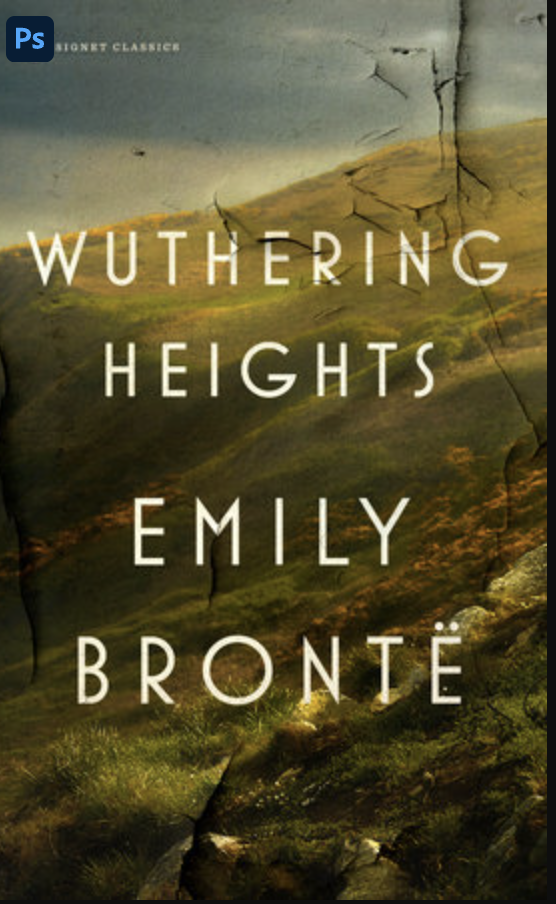
Wuthering Heights by Emily Brontë
Theodoros Kafantaris
Published on December 05, 2025
Introduction
Few novels sweep readers into a storm of emotion quite like Emily Brontë’s Wuthering Heights—a book that arrives with thunder, leaves with lightning, and somehow manages to remain irresistibly magnetic after nearly two centuries. Equal parts Gothic drama, psychological portrait, and meditation on love at its most destructive, this 1847 classic has secured its place as one of literature’s most haunting works.
Why is it significant? Because Wuthering Heights didn’t just nudge Victorian literature—it unsettled it. Readers of the time were shocked by its raw emotion and morally messy characters, but modern audiences appreciate exactly those qualities. Today, it stands as a pioneering exploration of passion, trauma, obsession, and the cyclical nature of human pain.
If you’ve ever wondered how dark a love story can get while still being called a love story, this is the book that answers that question.
About the Author
Emily Brontë (1818–1848) was one of the three famous Brontë sisters—Charlotte, Emily, and Anne—who collectively reshaped English literature in the 19th century. Emily was the most private, introspective, and enigmatic of the trio. Her published works were few: a shared volume of poetry with her sisters and this singular, sensational novel. Yet despite its initial lukewarm reception, Wuthering Heights eventually became recognized as a groundbreaking masterpiece.
Emily grew up on the Yorkshire moors, a setting reflected directly in the book’s fierce landscapes. She was known for her intense imagination, solitary nature, and resistance to the social expectations placed on women. Writing under the pen name Ellis Bell, she aimed to avoid the era’s gender bias—and her novel’s wild emotional terrain may have been even harder for Victorian readers to swallow if they’d known a woman wrote it.
Interesting fact: Wuthering Heights and Jane Eyre were published the same year by different Brontë sisters. Imagine that household.
Story Overview
I. The Storm Begins: Mr. Lockwood Arrives
The novel opens when Mr. Lockwood, a tenant at Thrushcross Grange, visits his surly landlord, Heathcliff, at the neighboring, grim estate Wuthering Heights. Lockwood endures ghostly visions, inhospitable hosts, and a feeling that something is deeply wrong in this household. Intrigued—and slightly terrified—he asks his housekeeper, Nelly Dean, to explain the tangled history of the inhabitants.
II. Catherine and Heathcliff: A Bond Born on the Moors
Nelly recounts the early days: the Earnshaw family adopts an orphan boy, Heathcliff, whose intense bond with young Catherine Earnshaw soon grows into a fierce, consuming connection. Yet social class and personal pride stand in their way. Catherine chooses to marry the refined Edgar Linton instead, famously declaring that marrying Heathcliff would “degrade” her—while also declaring that she is Heathcliff. Mixed signals, Victorian-style.
Heathcliff, wounded and furious, disappears, vowing silent revenge.
III. Return of the Antihero: The Cycle of Vengeance
Years later, Heathcliff returns wealthy, hardened, and determined to upend everyone’s life. He manipulates, marries strategically, and weaponizes generational trauma. His obsession with Catherine—now gravely ill—never fades, and her death only deepens his bitterness and longing. What follows is a cascade of damaged relationships, broken families, and emotional wreckage that makes even the moors seem welcoming.
IV. The Second Generation: Breaking or Continuing the Cycle
The children of the first generation—Cathy Linton, Hareton Earnshaw, and Linton Heathcliff—inherit the fallout of their predecessors. Yet something vital shifts: Cathy and Hareton slowly form a gentle, hopeful bond, suggesting that compassion can rise from the rubble of past mistakes. Their story provides the balance and closure the first generation never achieved.
V. After the Storm: The Ending
As Heathcliff descends into a hallucinatory, grief-driven exhaustion, he finally dies—seemingly reunited with Catherine in a supernatural sense. Peace settles over the moors at last. Lockwood returns to find the once-dark households lightened, transformed by the resilience of the younger characters.
The novel ends not with triumph, but with quiet renewal.
Key Takeaways
-
Love can be transformative—or destructive.
Catherine and Heathcliff’s relationship shows what happens when passion lacks boundaries, communication, and healthy attachment. -
Trauma often repeats across generations—until someone chooses differently.
The second-generation characters illustrate the possibility of breaking harmful cycles. -
Setting shapes character.
The windswept moors mirror the emotional turbulence of the story—nature as mood board. -
Revenge rarely satisfies.
Heathcliff’s lifelong quest for vengeance erodes both his humanity and his happiness. -
Social class influences far more than romance.
Class divides fuel much of the tension and tragedy, reminding readers how societal pressures shape personal choices.
Why This Book Is a Must Read
Wuthering Heights earns its place on any “100 Books You Must Read” list because it is incomparable—wild, emotionally raw, and stylistically bold. Emily Brontë pushed the boundaries of the Victorian novel, crafting characters who defy easy moral categorization and a narrative structure that feels modern even today. Its exploration of obsession, morality, identity, and redemption continues to captivate readers, scholars, and filmmakers alike. This is a book that lingers—unsettling, beautiful, and unforgettable.


