
The Wrath Economy
Theodoros Kafantaris
Published on October 05, 2026
The Scene
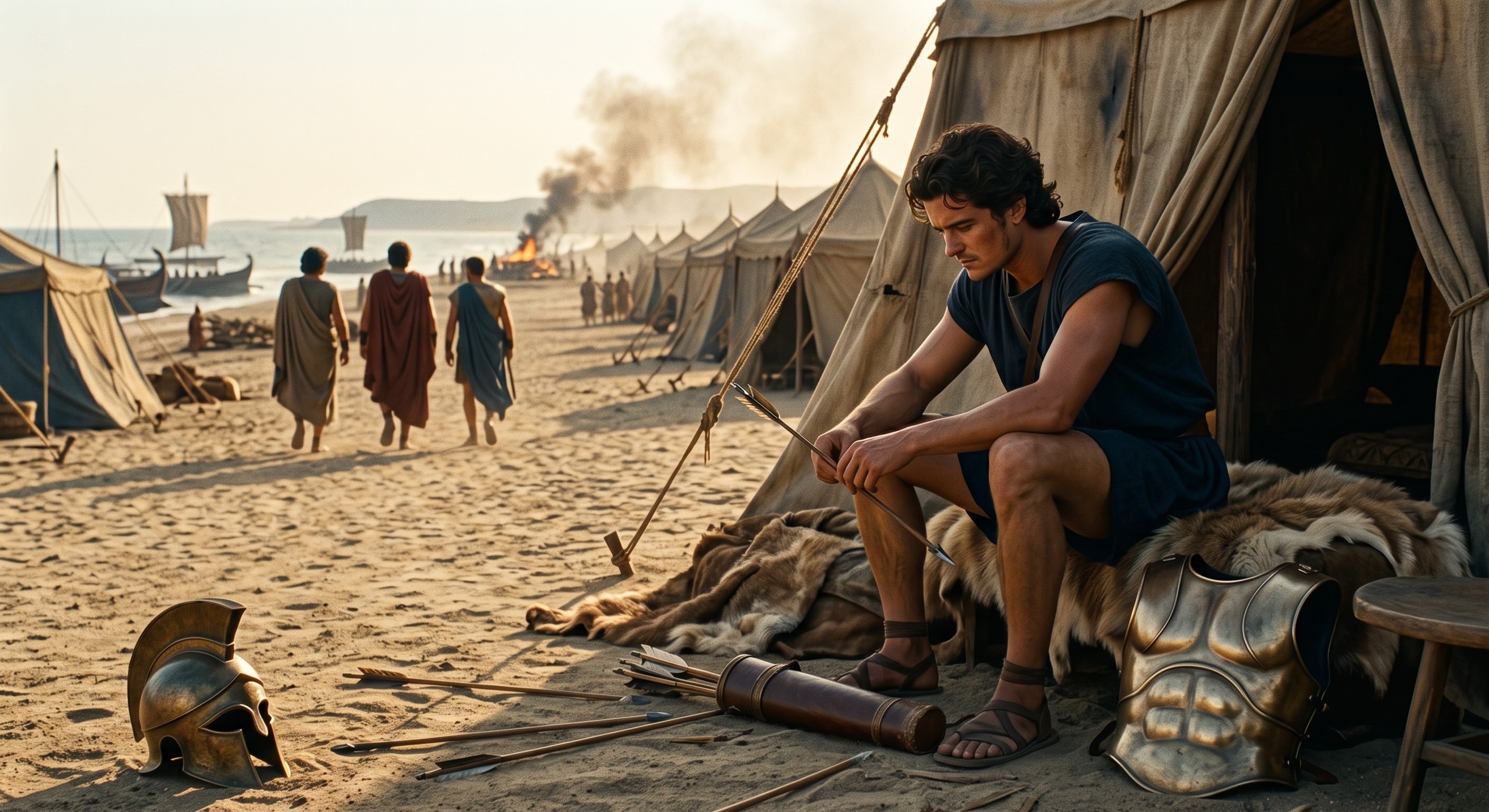
Achilles never really leaves the story after the quarrel over Briseis — he just leaves the fighting. For most of the middle of the Iliad, he sits in his tent by the ships while the war he's the best at goes badly without him. Homer keeps cutting back to him: brooding, watching the smoke over the battlefield, refusing every overture.
And there are several overtures. Eventually, Agamemnon sends an embassy — Odysseus, Ajax, and Achilles' own mentor Phoenix — with an almost absurd pile of compensation: gold, tripods, horses, seven untouched women, the return of Briseis "with oaths that I never went up into her bed," and the promise of one of Agamemnon's own daughters in marriage, plus seven cities, if Achilles will just come back and fight.
Achilles turns it all down. Not because the offer is too small. Because, as he says himself, no amount of cattle or gold is worth what he's lost — and what he's lost, by this point, isn't Briseis. It's the belief that any of it was ever worth fighting for in the first place.
The wrath has outgrown its original cause. It's no longer about Agamemnon's insult; it's become the lens Achilles sees the entire war through.
The Mechanism
This is the part that trips people up if they only remember the plague and the priest: the mênis — the wrath the poem opens by naming, in its very first word — doesn't stay proportional to what triggered it. It becomes self-sustaining. Once Achilles has reorganized his identity around being wronged, the wrong no longer needs new fuel to keep burning. Fixing the original grievance wouldn't even resolve it anymore, because the grievance has quietly turned into something else: a stance, a vantage point, a way of relating to everyone around him.
That's why the embassy fails so completely. They're negotiating with the Achilles from the quarrel — the one who wanted his status restored. But the Achilles in the tent has moved past wanting anything restored. Notice what he doesn't ask for: he never asks Agamemnon to admit he was wrong, never asks for an apology that would actually satisfy him. There's nothing left to offer, because the thing he's protecting now is the wrath itself, not the wound underneath it.
The Mirror
You know an Achilles. Maybe you've been one.
-
The estranged relative who's turned down every attempt at reconciliation for a decade, long after anyone can remember exactly what the original fight was about — because the distance itself has become the relationship.
-
The online account that made its name being aggrieved about one thing and now can't stop, because the audience showed up for the anger, not the original cause, and the algorithm rewards the performance of being wronged more than it rewards being right.
-
The company that built a whole brand identity around being the scrappy underdog fighting some corporate villain, years after it stopped being either scrappy or an underdog — because "we're the ones who got wronged" is a better story than "we won, actually."
This is the part the outrage economy runs on, and Homer clocked it three thousand years before anyone built a platform to monetize it: grievance, sustained long enough, stops being a response to an injury and starts being a source of identity and even income.
That's precisely why it's so hard to talk someone out of it — you're not just asking them to let go of a complaint. You're asking them to figure out who they are without it.
Achilles only comes back, in the end, not through better diplomacy but through something worse than any offer Agamemnon could make: a grief bigger than the grievance. It takes losing Patroclus to make the wrath finally feel small.
Read the series: ← Previous: The Quarrel Over Briseis · Next: The Bargain Sarpedon Makes → · All 10 posts
Post 2 of 10 in Homer Iliad


