
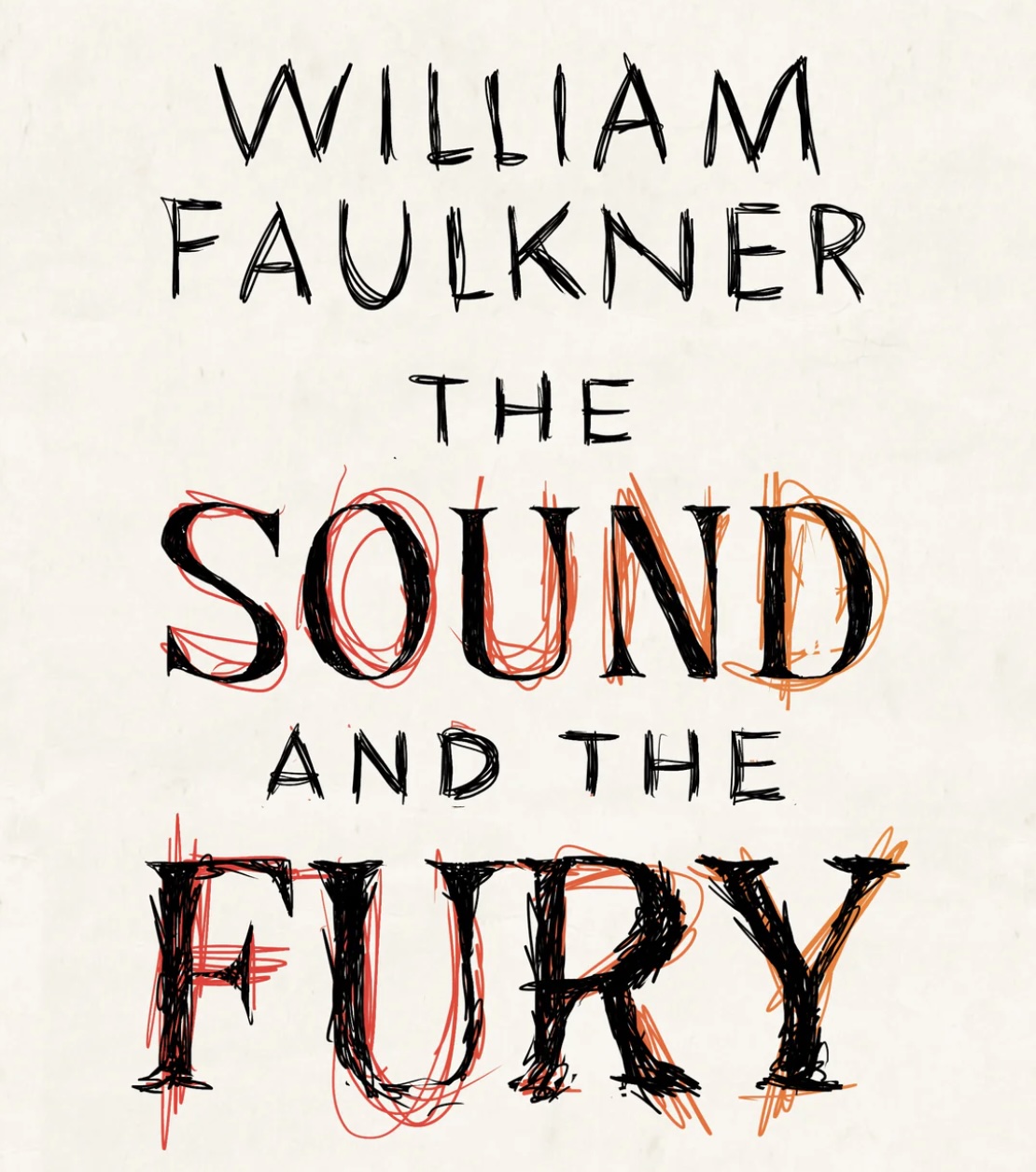
The Sound and the Fury by William Faulkner
Theodoros Kafantaris
Published on December 25, 2025
1. Introduction
If Absalom, Absalom! is the mountain, The Sound and the Fury is the dense, fog-covered forest at its base. Published in 1929, this novel is widely considered one of the greatest works of American literature—and arguably the most challenging.
It is the story of the tragic collapse of the Compson family, formerly Southern aristocrats who are drowning in debt, alcoholism, and delusions of grandeur. But this isn't a standard family drama. It is a radical experiment in storytelling that smashes the concept of time into pieces. It forces you to step inside four very different minds to piece together the truth. It is significant because it changed how novels could be written, proving that a story doesn't have to move in a straight line to hit you with the force of a freight train.
2. About the Author
William Faulkner (1897–1962) By the time Faulkner wrote The Sound and the Fury, he was determined to write something purely for himself, without worrying about publishers or sales. Ironically, this artistic freedom resulted in his most enduring masterpiece.
Faulkner famously struggled to write this book, describing it as his "most splendid failure." He tried to tell the story of the Compson children three separate times through different characters, felt he still hadn't got it right, and finally added a fourth section to tie it together. He was a master of "Stream of Consciousness," a style that attempts to capture the chaotic, unorganized flow of human thought. In this novel, he pushes that style to its absolute limit.
3. Story Overview
The Sound and the Fury is a novel of four distinct sections, each offering a unique perspective on the decline of the Compson family, a once-proud Southern dynasty now crumbling under the weight of alcoholism, financial ruin, and moral decay. The narrative is fragmented, jumping across time and consciousness, forcing the reader to actively piece together the story from the memories and perceptions of its four narrators.
The first section is narrated by Benjy Compson, a 33-year-old man with an intellectual disability who perceives the world through sensory triggers that plunge him into past memories. Benjy's narrative is a chaotic swirl of present and past, centered on the loss of his beloved sister, Caddy. Her absence is the core of his trauma, and through his disjointed recollections, we glimpse the family's early fractures: Caddy's sexual awakening, her mother's coldness, and the brothers' possessive love. Benjy's section establishes the novel's central themes of loss, time, and the failure of communication.
The second section shifts to Benjy's older brother, Quentin, on the day of his suicide at Harvard in 1910. Quentin's narrative is a torrent of obsessive thoughts about family honor, purity, and the passage of time. He is haunted by Caddy's loss of virginity, which he equates with the family's fall from grace. His section is a dense, poetic stream of consciousness filled with broken clocks, shadows, and fragmented memories. Quentin's inability to reconcile his idealized past with the present drives him to despair, culminating in his drowning in the Charles River. His story is a devastating exploration of pride, obsession, and the destructive power of nostalgia.
The third section is narrated by the third brother, Jason, in 1928. Jason is a bitter, cynical man consumed by greed and resentment. Unlike the poetic Quentin or the innocent Benjy, Jason is grounded in harsh reality—he works a dead-end job, cheats his niece out of money, and complains endlessly about his burdens. His narrative provides the clearest plot details, revealing the family's financial desperation and the ongoing conflict over Caddy's daughter, Miss Quentin. Jason's cruelty and materialism represent the worst of the "New South," and his section exposes the family's complete moral bankruptcy. Yet, his perspective is also the most reliable in terms of factual events, offering a stark contrast to the emotional turmoil of the earlier sections.
The final section is told in third-person omniscient, focusing on Dilsey, the family's Black cook and matriarch. Set on Easter Sunday 1928, this section provides an objective view of the Compson household's final collapse. Dilsey is the only character who demonstrates true strength, faith, and endurance. She cares for the family despite their dysfunction, and her perspective offers a moral anchor. Through her eyes, we see the tragedy of the Compsons with clarity: their self-destruction is inevitable, yet she remains steadfast. The novel ends with Benjy's howling as his carriage is driven the wrong way around the town square, a symbol of the family's irreparable disorder. Dilsey's quiet dignity stands in stark contrast to the Compsons' chaos, suggesting that endurance, not pride, is the true virtue.
4. Key Takeaways
- The Subjectivity of Time: To Benjy, time is nothing; to Quentin, it is a prison; to Jason, it is money. The novel demonstrates that our perception of time is shaped by our emotional states and obsessions, and that the past is never truly past.
- The Decline of the Old South: The Compsons represent the rotting aristocracy, unable to adapt to the modern world. Their clinging to a glorified past prevents them from surviving the present, illustrating the dangers of nostalgia and pride.
- The Elusiveness of Truth: No single narrator gives the full story; the reader must assemble the truth from four biased perspectives. This underscores that truth is rarely objective but is a composite of different, flawed viewpoints.
- The Power of Endurance: In the face of the Compsons' nihilism, Dilsey represents faith and perseverance. While "great" families fall due to hubris, the humble and steadfast endure, offering a counterpoint to the novel's tragedy.
5. Why This Book Is a Must Read
The Sound and the Fury is the ultimate literary puzzle. It belongs on any list of must-read books because it challenges you to be an active participant in the storytelling. It teaches patience and empathy: you must learn to read Benjy's mind, decipher Quentin's pain, and tolerate Jason's cruelty. Once the pieces click into place, the emotional payoff is devastating. It is a book about the failure of love and the disintegration of a family, told in a way that makes you feel that disintegration in your bones. It is, quite simply, a work of genius that forever changed the possibilities of the novel.


