
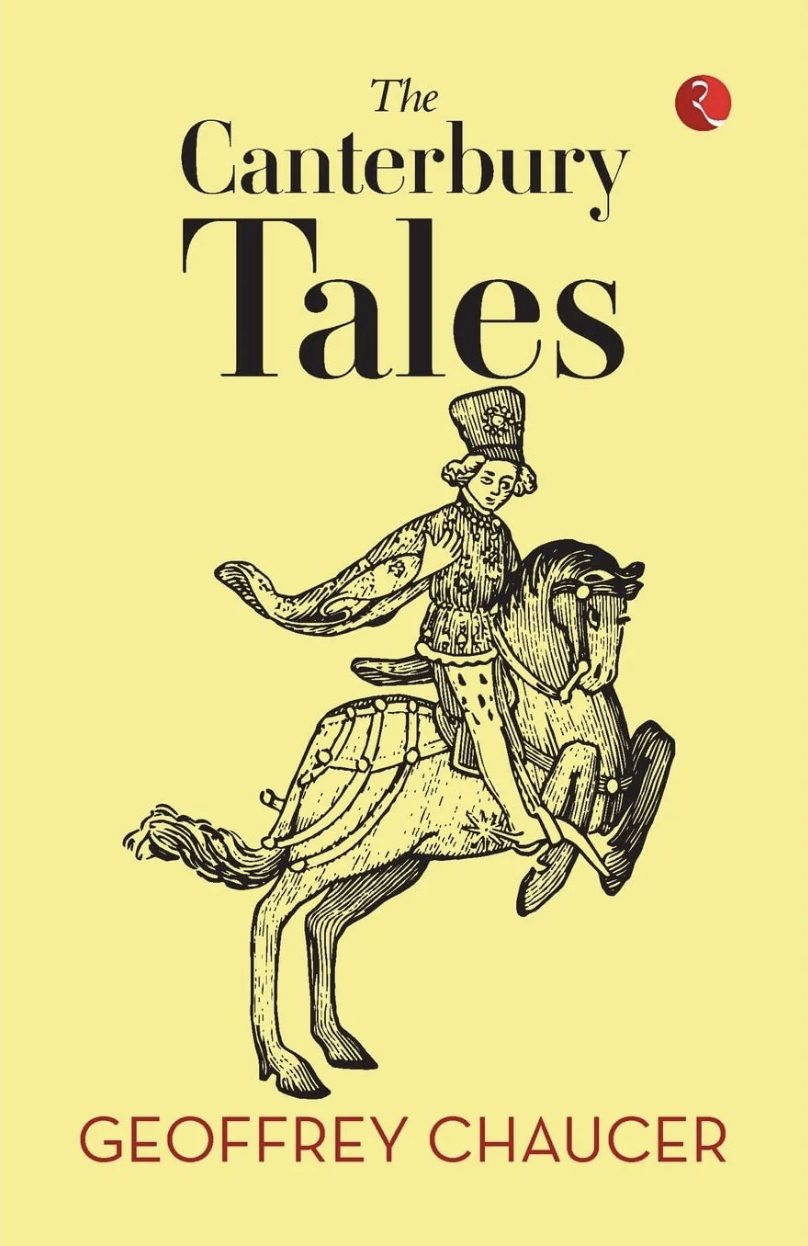
The Canterbury Tales by Geoffrey Chaucer
Theodoros Kafantaris
Published on December 10, 2025
1. Introduction
Welcome to the "100 Books You Must Read" series! We kick off our journey not on a modern highway, but on a dusty road in 14th-century England. Geoffrey Chaucer's The Canterbury Tales is one of the most significant works in English literature. It's an unfinished collection of stories told by a group of pilgrims traveling from Southwark to the shrine of Thomas Becket at Canterbury Cathedral.
Why is this book so noteworthy? It's a foundational text, often credited with popularizing the use of the Middle English vernacular over French or Latin in literature. It's a remarkable cultural snapshot, providing a vibrant, often humorous, and surprisingly diverse look at nearly every class of medieval society, from the highest-ranking Knight to the lowest Plowman. Its significance lies in its incredible range of human experience and its powerful influence on the English literary tradition that followed.
2. About the Author
Geoffrey Chaucer (c. 1343–1400) was a courtier, diplomat, civil servant, and poet, living through one of the most turbulent times in English history, including the Black Death and the Hundred Years' War. Unlike many of his contemporaries who wrote in French, Chaucer chose to write in the language of the people—Middle English. His major works, including Troilus and Criseyde and The House of Fame, established his reputation, but The Canterbury Tales remains his masterpiece.
Chaucer's style is characterized by his sharp satire, keen observation of character, and mastery of different literary forms, from the courtly romance to the vulgar fabliau. An interesting, and important, fact is that Chaucer was one of the first poets to be buried in Westminster Abbey's Poet's Corner, cementing his status as the "Father of English Literature." His work is not just historically important; his characters feel incredibly modern—their concerns about love, money, and power are timeless.
3. Story Overview
The overarching framework of The Canterbury Tales is a frame narrative: the tale of the pilgrimage itself. The pilgrims agree to a storytelling contest, where each person tells two tales on the way to Canterbury and two on the way back. The host, Harry Bailey, acts as the judge, with the winner receiving a free meal upon their return. While the collection is unfinished—Chaucer completed only about 24 tales out of a possible 120—the stories we have offer an unparalleled view into medieval culture.
The book begins with the General Prologue, which introduces the 29 pilgrims and the poet-narrator (a somewhat naive version of Chaucer himself). These introductions are famous for their vivid and witty descriptions, known as portraits. Chaucer meticulously details their clothing, social rank, and moral character. We meet figures like the noble Knight, the pious Parson, the greedy Prioress (Madam Eglentyne), the lecherous Friar, and the unapologetically independent Wife of Bath. The Prologue sets up the central conflict: the collision of various social classes and personalities on a single journey.
The tales themselves showcase incredible narrative diversity. They are not one story but many, reflecting the different personalities and social statuses of the tellers. The Knight tells a tale of courtly romance and chivalry. The Miller, a boisterous peasant, counters with a crude and hilarious fabliau (a short, bawdy story). The stories switch between high-minded religious morality and lowbrow sexual comedy. This stylistic contrast highlights the tension between the sacred and the profane that permeated medieval life. The central themes woven throughout the tales are vast: greed and corruption (seen in the tales of the Pardoner and the Summoner), the nature of true nobility, and the complex dynamics of marriage and gender roles (most famously debated in the Tale of the Wife of Bath). The narrative style is not always straightforward; the tales often contain digressions and interruptions, and the pilgrims frequently react to each other's stories, adding a layer of meta-narrative commentary that keeps the whole structure lively and dynamic.
Key scenes include the Wife of Bath's Prologue, where she defends her five marriages and argues for female sovereignty, and the Pardoner's Tale, a gripping moral allegory about greed. The characters are richly drawn: the Knight represents chivalric ideals, the Miller embodies crude humor, and the Wife of Bath is a proto-feminist icon. The literary significance of The Canterbury Tales lies in its pioneering use of the vernacular, its realistic portrayal of medieval society, and its influence on later writers like Shakespeare and Dickens.
4. Key Takeaways
- The Power of Storytelling: The book demonstrates how narrative can unify disparate people, offering a form of social currency, entertainment, and moral instruction across all classes.
- The Complexity of Human Nature: Chaucer's characters are neither wholly good nor wholly evil. They are complex, flawed, and relatable, showing that human nature hasn't changed much in six centuries.
- Social Satire is Timeless: Chaucer expertly uses humor and exaggeration to criticize the corruption within the Church and the pretentiousness of the burgeoning middle class, proving satire is a perennial tool for social commentary.
- A Snapshot of Language Evolution: Reading it, even in translation, gives readers a powerful appreciation for the English language's history and its transformation from Middle English into what we speak today.
- The Medieval Woman's Voice: Through characters like the Wife of Bath, the text provides a rare look at a formidable, outspoken medieval woman who challenges patriarchal norms regarding marriage and sexuality.
5. Why This Book Is a Must Read
The Canterbury Tales is an essential read not just for its historical importance as the first major work written in English, but because it remains a profoundly entertaining and insightful literary achievement. It is a masterpiece of characterization, a witty social critique, and a vibrant time capsule preserving the sights, sounds, and morals of the 14th century. It belongs on this list because it fundamentally shaped the course of English literature, demonstrating the expressive power of the vernacular and establishing a tradition of realism, humor, and complex character portrayal that resonates with readers to this day. It is, quite simply, where English literature begins.


