
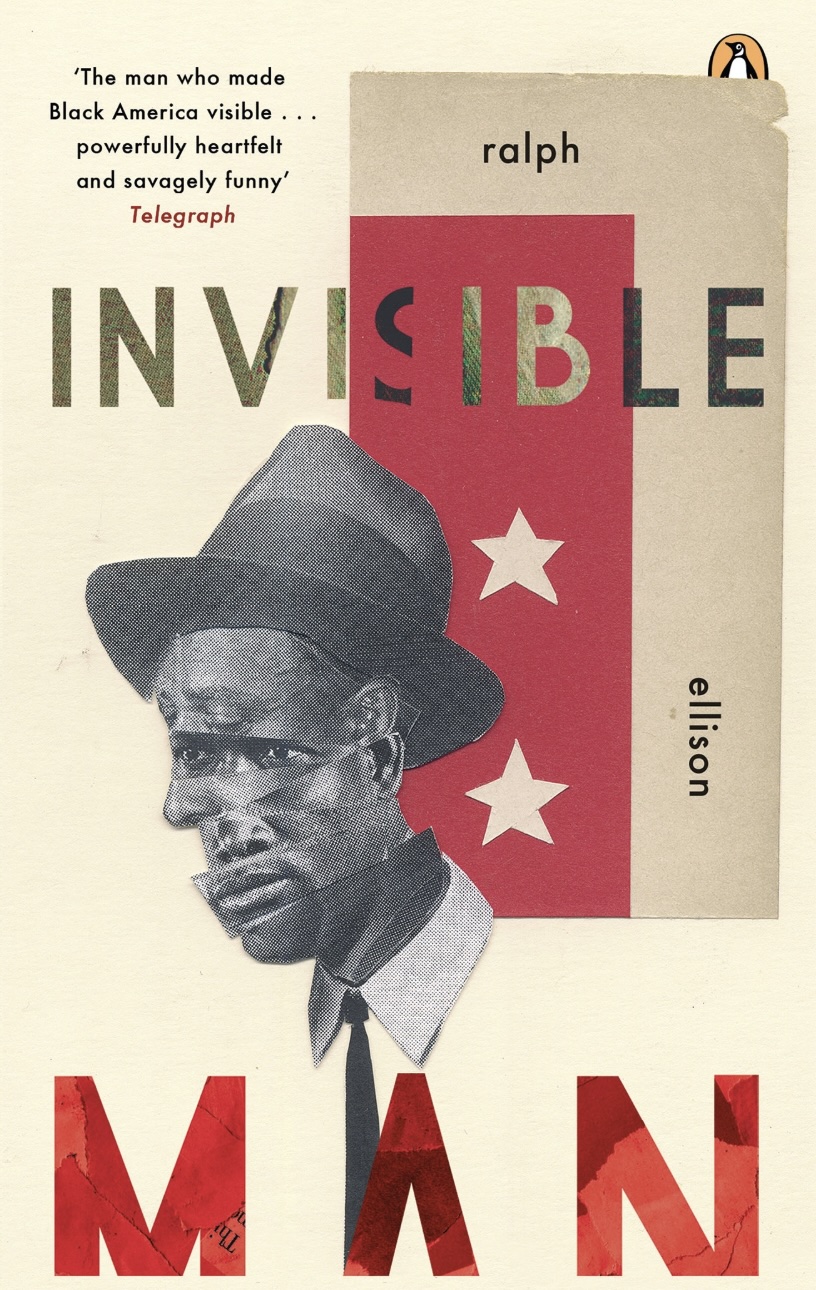
Invisible Man by Ralph Ellison
Theodoros Kafantaris
Published on December 21, 2025
1. Introduction
"I am an invisible man." With that simple, shattering declaration, Ralph Ellison opened his 1952 monumental debut, Invisible Man, and fundamentally reshaped the landscape of American letters. This novel is the sprawling, satirical, and profound journey of an unnamed young Black man from the Jim Crow South to the dynamic, deceptive streets of 1930s Harlem, chronicling his realization that the greatest obstacle he faces isn't outright hatred, but the willful blindness of the white world. The book's significance is monumental. It is an extraordinary work of Modernism, utilizing surrealism, jazz rhythms, and complex allegory to convey the psychological turmoil of living as a Black American. It is a necessary and painful examination of American identity, showing that being "invisible" means being denied individuality and humanity because others choose to see only a stereotype, an idea, or a problem—but never the man himself.
2. About the Author
Ralph Waldo Ellison (1914–1994) was an American novelist, literary critic, and scholar. He was named after Ralph Waldo Emerson, a figure whose ideas on individualism and self-reliance the younger Ellison would both embrace and critique throughout his career. A formative experience for Ellison was his education, particularly his study of music at the Tuskegee Institute, and later his literary engagement in New York, where he became friends with major figures like Richard Wright. His writing style in Invisible Man is a masterful synthesis of influences: it carries the weighty intellectualism of Dostoevsky, the surreal disorientation of Kafka, and the improvised, complex syncopation of jazz. Ellison explicitly structured his narrative like a blues concerto, moving through themes (or movements) that are stated, developed, and often dissonantly resolved. Ellison's work stands apart from some of his contemporaries because he rejected the notion that the Black writer's sole function was socio-political protest. Instead, he insisted on the complexity and full humanity of the Black experience, demanding that it be understood as a central part of the American condition.
3. Story Overview
The nameless narrator’s odyssey unfolds through three distinct, disillusioning phases, each representing a false path to identity. The novel begins in the Jim Crow South, where the narrator is a promising student at a prestigious Black college. His journey starts with a horrific, symbolic experience known as the "Battle Royal," where he and other young Black men are forced to fight each other blindfolded for the entertainment of white businessmen—a shocking metaphor for white manipulation and internalized racism. He is rewarded with a scholarship, but is later expelled by the college's rigid, assimilationist president, Bledsoe, who views the narrator's honesty as a threat. The narrator leaves for New York with letters of recommendation, which he later discovers are actually letters of damnation, advising recipients not to help him. This betrayal shatters his naive faith in education and authority, setting the stage for his search for a new identity.
In New York, the narrator attempts to find success and guidance. He lands a dehumanizing job at the Liberty Paints factory, a cruel irony as the plant produces the whitest white paint possible, symbolizing racial purity. There, he is nearly killed in an industrial accident that serves as a psychic rebirth, making him briefly forget his past identity. After recovering, he encounters Mr. Norton, one of the college trustees, who uses the narrator merely as a prop for his own sentimental, self-serving view of racial progress. These encounters force the narrator to realize that both liberal and conservative white power structures see him only as a tool or a symbol. He then becomes a charismatic public speaker for the Brotherhood, a seemingly progressive political organization, believing he is fighting for the people. However, he gradually realizes that the Brotherhood views him not as an individual leader, but as a weapon—a symbol to be deployed, manipulated, and discarded when inconvenient.
After a series of violent events and betrayals, including a riot in Harlem that the Brotherhood orchestrates, the narrator is forced to go into hiding. He retreats to a coal cellar, a literal underground space, where he begins to reflect on his experiences. There, he discovers the power of his own voice and the richness of Black cultural heritage, particularly through the blues and jazz. The novel ends with the narrator deciding to emerge from his hole, not to rejoin society as it is, but to share his story and assert his existence. The narrative structure is circular, beginning and ending in the underground, emphasizing the theme of invisibility and the necessity of self-definition. Major themes include the search for identity, the critique of ideology, the power of history and culture, and the psychological effects of racism. Key characters include the narrator, Dr. Bledsoe, Mr. Norton, Brother Jack, and Ras the Exhorter, each representing different facets of the oppressive systems the narrator encounters.
4. Key Takeaways
- The Problem of Recognition: The core message is that the narrator is not literally unseen, but is unrecognized and unheard by a society that refuses to acknowledge his complex individuality, choosing instead to project their own racial stereotypes onto him.
- Identity is Self-Made: The narrator’s journey is one of shedding the identities imposed upon him (by his college, by the Brotherhood, by white patrons) to discover an authentic self, achieved only after he literally retreats underground.
- The Danger of Abstraction: The novel fiercely critiques all ideologies—political, racial, or social—that reduce human beings to abstract concepts, demonstrating how these concepts (like "the Negro Problem" or "the Revolutionary Proletariat") mask true human suffering.
- The Power of History and Culture: The narrator finds true sustenance and connection to his heritage not in official histories, but in the raw, vibrant, and often misunderstood cultural forms of the Black community, particularly in blues and jazz music.
5. Why This Book Is a Must Read
Invisible Man is a towering achievement because it fundamentally changed how race, identity, and modernism intersected in American literature. It gives voice to the profound psychological alienation felt by Black Americans while simultaneously claiming that experience as central to the American identity itself. By positioning his hero underground—in his hole, surrounded by stolen electric light bulbs—Ellison creates a powerful metaphor for the intellectual and social exile necessary to achieve true self-awareness. For its stunning prose, its allegorical brilliance, and its necessary, searing critique of the American Dream, this novel belongs at the very top of your must-read list.


