
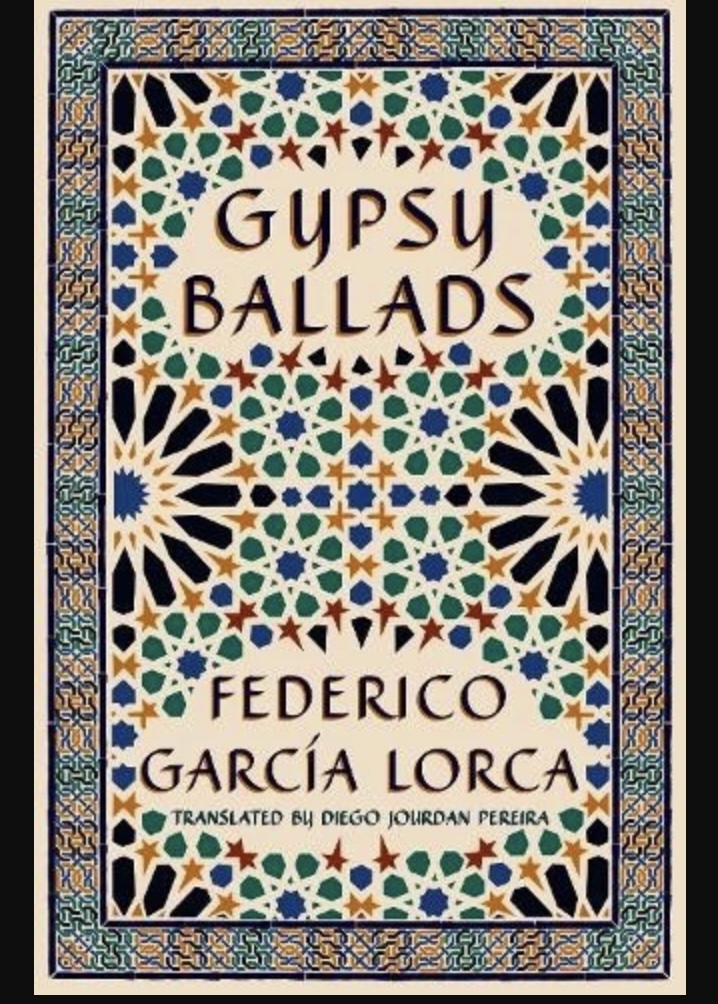
Gypsy Ballads by Federico García Lorca
Theodoros Kafantaris
Published on December 28, 2025
1. Introduction
Poetry often gets a bad reputation for being dusty, academic, or disconnected from real life. Federico García Lorca’s Gypsy Ballads (originally titled Romancero Gitano, published in 1928) shatters that reputation completely. This collection is vibrant, violent, sensual, and pulsing with the hot blood of Andalusia.
It is the book that made Lorca a superstar in the Spanish-speaking world. It isn't just a collection of pretty rhymes; it is a mythic re-imagining of the Spanish South. Lorca takes the "Gitano" (Gypsy/Roma) figure and elevates them to the status of ancient heroes, battling destiny, nature, and the oppressive forces of the law. It is a masterpiece where the moon is a deadly dancer, the wind is a lustful pursuer, and lemons are made of gold.
2. About the Author
Federico García Lorca (1898–1936) Lorca is the soul of Spanish poetry. A member of the famous "Generation of '27," he was a brilliant playwright, pianist, and poet who successfully fused the ancient folk traditions of Spain with the radical experiments of Surrealism.
He was a man of intense charisma and deep melancholy. Tragically, his life was cut short at the age of 38. At the outbreak of the Spanish Civil War, Lorca was arrested by Nationalist forces—targeted for his leftist views and his homosexuality—and executed by firing squad. His body was never found, but his voice in Gypsy Ballads remains immortal, serving as a defiant symbol of artistic freedom against fascism.
3. Story Overview
Unlike novels with a single linear plot, Gypsy Ballads creates a mythic, dreamlike world of Andalusia through eighteen interconnected poems. Lorca weaves together three main currents: the mythic power of nature, the tragic romance of the sleepwalking ballad, and the violent clash between the free-spirited Roma people and the oppressive Civil Guard. The collection opens with "Ballad of the Moon, Moon" (Romance de la Luna, Luna), where the moon descends to a forge as a woman in white, dancing to steal a child. This sets the tone: nature is not passive but an active, often dangerous character. In "Preciosa and the Air," the wind becomes a satyr chasing a young girl, while water serves as a tomb. Lorca blurs the line between reality and the supernatural, suggesting that ancient gods still haunt the olive groves.
The centerpiece is the famous "Sleepwalking Ballad" (Romance Sonámbulo), which contains the iconic line: "Green, how I want you green." This poem tells the fragmented story of a wounded smuggler trying to reach his love, who waits on a balcony. The narrative is slippery—is the girl alive or a ghost? Is green the color of life or decay? Lorca refuses to explain, forcing readers to feel the tragedy rather than understand it. This poem captures the essence of duende, a Spanish concept of heightened emotion tied to death and earthiness. Other ballads explore forbidden love, honor, and fate, such as "The Faithless Wife" and "Thamar and Amnon," which adapt biblical stories with a raw, sensual edge.
Lorca grounds his myths in harsh reality. The Roma people live on the margins, clashing with authority. In "Ballad of the Spanish Civil Guard," the police descend on a festive Roma city, depicted as soulless automatons with "skulls of lead," destroying vibrant life. This brutal depiction of freedom versus authoritarian order became terrifyingly prophetic when Lorca was executed by Nationalist forces in 1936. Throughout the collection, Lorca uses traditional ballad forms (easy to memorize and sing) but infuses them with surreal, dreamlike imagery—lemons made of gold, thighs like surprised fish, silence of lime. The result is a work that feels both ancient and radically modern, a timeless exploration of passion, oppression, and the human condition.
4. Key Takeaways
- The Symbolism of Green: In Lorca’s world, green is rarely just a color of nature. It is often the color of death, mystery, and forbidden desire. Insight: Symbols in poetry are fluid; they change meaning depending on the emotional landscape of the poem.
- The Presence of Duende: The poems are filled with a dark, earthy sorrow that acknowledges death is always close by. Insight: True art often comes from a confrontation with mortality, not an avoidance of it.
- The Dignity of the Marginalized: Lorca elevates the persecuted Gitano culture to the level of Greek tragedy. Insight: There is profound beauty and heroism in the lives of those society often ignores or scorns.
- Surrealism meets Folklore: Lorca mixes traditional ballad structures (easy to memorize and sing) with bizarre, dreamlike imagery. Insight: You can respect tradition while completely reinventing it; the old and the new can coexist to create something powerful.
5. Why This Book Is a Must Read
Gypsy Ballads is a must-read because it teaches you that language has a physical texture. Even in translation, Lorca’s images hit you like a physical blow—"silence of lime," "voices of tin," "thighs like surprised fish." It is the perfect entry point for people who think they don't like poetry. It is dramatic, visual, and narrative. It transports you instantly to a heat-soaked Spanish night where danger and beauty are indistinguishable. To read Lorca is to understand the passion of Spain, and to see how a poet can turn the suffering of a specific people into a universal song of the human experience.


