
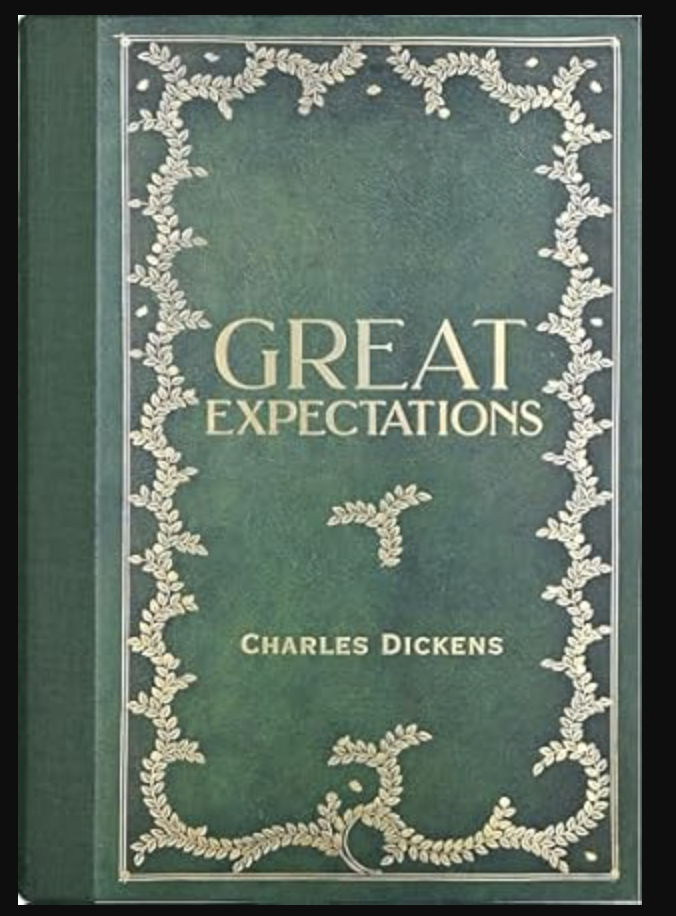
Great Expectations by Charles Dickens
Theodoros Kafantaris
Published on December 13, 2025
1. Introduction
Stepping into the world of Charles Dickens means entering a vibrant, often harsh, yet deeply human version of 19th-century England. Among his greatest works, Great Expectations (1861) stands out as a masterpiece of personal growth, social commentary, and psychological depth. It is the story of Pip (Philip Pirrip), a poor orphan whose life is suddenly and mysteriously transformed by a secret benefactor, leading him to abandon his humble origins for the glittering, often cruel, promise of the London elite.
Its significance lies in its brilliant use of the bildungsroman (a novel of maturation and education). Dickens uses Pip's journey to explore universal themes of ambition, class, guilt, and redemption. It is celebrated for its gripping plot, its unforgettable cast of eccentric characters, and its powerful critique of the Victorian obsession with "gentility" and wealth, asking the core question: can a fortune truly buy happiness or moral character?
2. About the Author
Charles Dickens (1812–1870) is the undisputed literary giant of the Victorian era. Born into relative poverty, his family's financial struggles (including his father being sent to debtor's prison) deeply informed his work, sparking his lifelong passion for social reform and his acute sensitivity to class inequality. He was a prolific writer, journalist, and social critic whose major works—including Oliver Twist, A Christmas Carol, David Copperfield, and A Tale of Two Cities—remain widely read and culturally influential.
Dickens's style is instantly recognizable, characterized by his melodrama, complex plotting, vivid detail, and masterful use of caricature. His characters, such as Scrooge and Miss Havisham, are so iconic they have become part of the English language. Great Expectations is notable for being one of his later, more concise and psychologically focused works, told entirely from the first-person perspective of Pip. A crucial fact is that Dickens wrote it specifically to be serialized in his weekly magazine, All the Year Round, which explains its episodic structure and compelling cliffhangers.
3. Story Overview
Great Expectations follows the life of Pip from his terrifying encounter as a small boy in a graveyard to his disillusioned maturity in London, structured around the three "stages" of his expectations. The novel opens with Pip, an orphan living a simple life with his strict sister, Mrs. Joe Gargery, and her kind blacksmith husband, Joe Gargery, in the Kent marshes. His life is irrevocably changed by two pivotal events: first, a terrifying meeting with the escaped convict Abel Magwitch in the graveyard, to whom Pip secretly provides food and a file; and second, his introduction to the dilapidated Satis House, home to the eccentric, wealthy spinster Miss Havisham and her beautiful, cold adopted daughter, Estella. Miss Havisham, jilted at the altar years ago, raises Estella to "break men's hearts." Pip immediately falls in love with Estella and becomes desperately ashamed of his humble origins, viewing Joe's world as coarse and common.
Suddenly, a lawyer named Mr. Jaggers informs Pip that he has a mysterious, anonymous benefactor and is to receive a large inheritance, or "great expectations," which will allow him to move to London to be educated as a gentleman. Pip assumes Miss Havisham is his secret patron and that she intends for him to marry Estella. In London, Pip attempts to shed his past, living extravagantly and adopting the snobbish airs of the upper class. He often treats Joe and his other childhood friends poorly, sacrificing moral goodness for social elevation. This stage highlights the central conflict between true character and external status. The greatest plot twist occurs when the true benefactor is revealed: it is not Miss Havisham, but the escaped convict Magwitch, whom Pip helped years ago. This revelation shatters Pip's world—his "great expectations" are founded not on genteel wealth, but on a criminal's fortune. Pip is horrified and faces a profound moral crisis.
The final phase involves Magwitch's attempted escape (and his subsequent death), Miss Havisham's tragic remorse, and Pip's slow, painful moral redemption. Pip finally realizes that Joe, the humble blacksmith, possesses the true nobility he sought in London society. The novel ultimately concludes with Pip having lost his fortune but having gained genuine self-knowledge and a commitment to moral integrity. Through Pip's journey, Dickens explores themes of social class, guilt, redemption, and the corrupting influence of wealth. Key characters include the loyal Joe, the manipulative Estella, the tragic Miss Havisham, and the complex Magwitch. Notable scenes include Pip's first encounter with Magwitch in the graveyard, the tense dinner at Satis House, and the dramatic revelation of Pip's benefactor. The novel's literary significance lies in its masterful first-person narrative, psychological depth, and biting social critique.
4. Key Takeaways
- True Nobility vs. Social Class: The book powerfully argues that gentility is a quality of the heart and mind (like Joe's), not of wealth, manners, or social standing.
- The Danger of Unchecked Ambition: Pip's obsessive desire for a higher social position leads him to arrogance, snobbery, and emotional cruelty, demonstrating that ambition can be a corrupting force.
- Guilt and Forgiveness: The characters are haunted by past actions—Pip by his treatment of Joe, Miss Havisham by her desire for revenge. The novel shows that redemption requires acknowledging guilt and seeking genuine forgiveness.
- Appearances Are Deceptive: Many characters are not who they seem: the gentle benefactor is a convict (Magwitch), the object of desire is emotionally manipulative (Estella), and the respectable lawyer operates in the criminal underworld (Jaggers).
5. Why This Book Is a Must Read
Great Expectations is a literary powerhouse that masterfully combines a suspenseful, emotionally complex plot with timeless social commentary. Its exploration of Pip's moral education—from a self-hating boy to a redeemed man—is perhaps Dickens's most psychologically sophisticated achievement. It belongs on the "100 Books You Must Read" list because it offers a brilliant critique of the corrosive effects of money and class snobbery while providing one of the most moving and unforgettable coming-of-age stories in the English language. It teaches that the greatest expectations we should hold are for our own character, not our fortune.


