
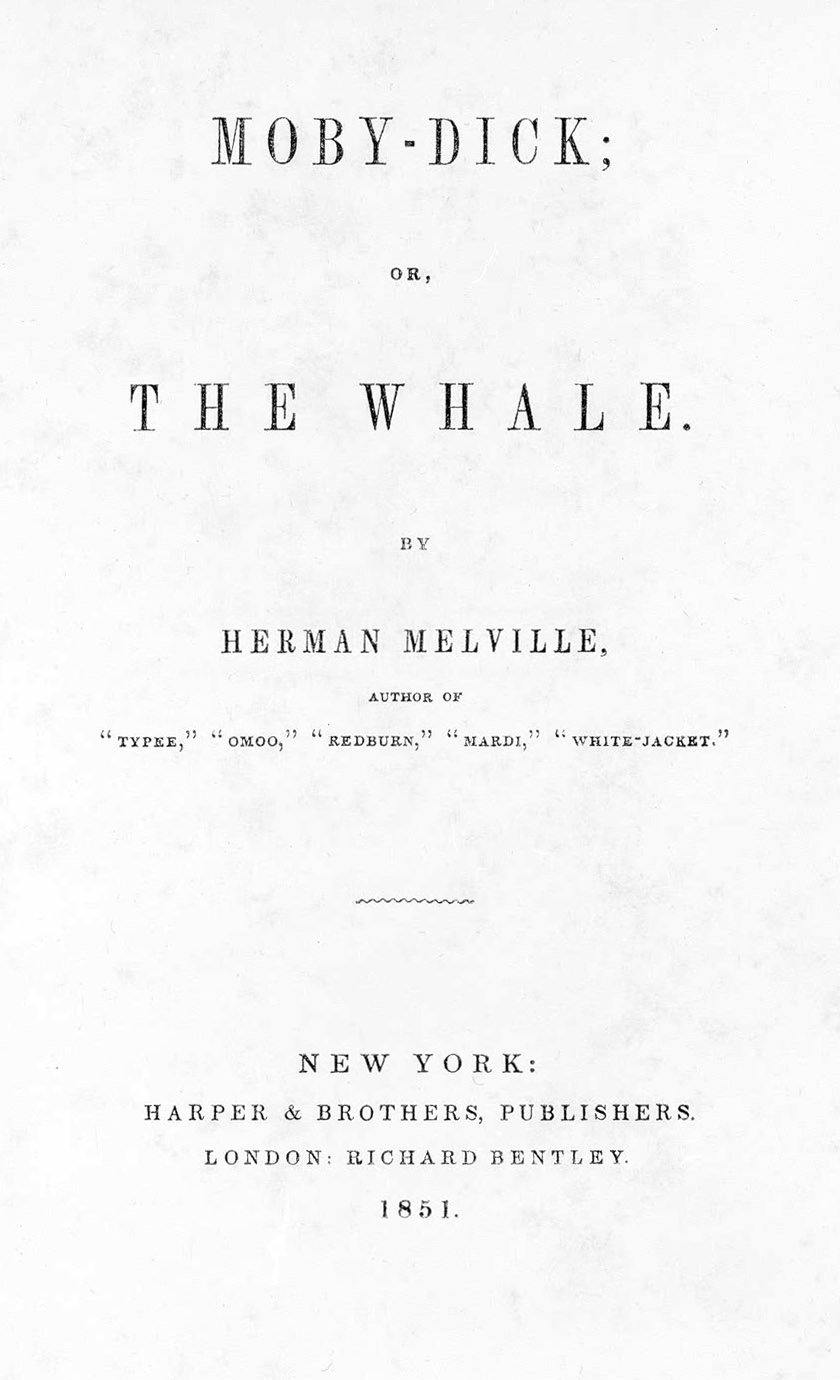
Moby-Dick by Herman Melville
Theodoros Kafantaris
Published on July 07, 2026
1. Introduction: Call Me Ishmael
Three words. The most famous opening in American literature, and perhaps the most deceptively simple. "Call me Ishmael" invites us onto the Pequod for what will become the strangest, most ambitious whaling voyage in literary history. Herman Melville's Moby-Dick (1851) was a commercial failure when published, dismissed by contemporary critics, and nearly ended Melville's career. Today it is universally acknowledged as one of the greatest novels ever written—the book William Faulkner said he wished he had written.
On the surface, it is a story about a whaling captain obsessed with killing a white whale that took his leg. Beneath that surface, it is an encyclopedic meditation on existence itself: on fate and free will, on the nature of evil, on America's imperial ambitions, on the limits of knowledge, and on humanity's relationship with the natural world.
2. The Voyage of the Pequod
Ishmael, our narrator, signs onto the whaling ship Pequod out of Nantucket. He is immediately paired with Queequeg, a tattooed South Seas harpooner who becomes his unlikely soulmate. The ship's captain, Ahab, does not appear for many chapters—building an almost supernatural sense of dread. When Ahab finally emerges, with his ivory leg carved from whalebone and the scar that seems to run from his head to his heel, we understand immediately that we are in the presence of something elemental.
Ahab nails a gold doubloon to the mast and promises it to the first man who sights the White Whale. The crew—a microcosm of humanity with sailors from every corner of the globe—is swept up in his monomania. Starbuck, the first mate, alone voices opposition, but his courage fails at the critical moment.
3. The White Whale as Ultimate Symbol
What is Moby Dick? A whale. A demon. God's agent. Nature's indifference. The unknowable. Melville refuses to pin the whale to any single meaning. Moby Dick is white—the color of absence, of all colors combined, of death and divinity. Ahab sees in the whale "the inscrutable thing" that he hates, and his quest becomes a cosmic rebellion: "I will wreak that hate upon him. Talk not to me of blasphemy, man; I'd strike the sun if it insulted me."
4. Major Themes
The Limits of Knowledge
Melville devotes entire chapters to cetology—the classification of whales—only to demonstrate that whales cannot be classified, cannot be fully known. The novel is a sustained critique of the Enlightenment's faith in reason and taxonomy. The world, Melville suggests, resists our attempts to categorize it.
Obsession and Self-Destruction
Ahab is literature's greatest portrait of monomania. His quest is not for the whale itself but for what the whale represents: a universe that is hostile or indifferent to human desire. His tragedy is that he cannot accept this—he must strike back, even if it means destroying himself and everyone around him.
5. Key Takeaways
- Some things cannot be known: The whale eludes all attempts at definition.
- Obsession destroys: Ahab's single-mindedness consumes not just him but his entire world.
- The ordinary contains the extraordinary: Melville finds cosmic significance in the grimy details of whaling.
- Community can resist tyranny: The novel's tragedy is that Starbuck fails to stop Ahab when he could have.


