
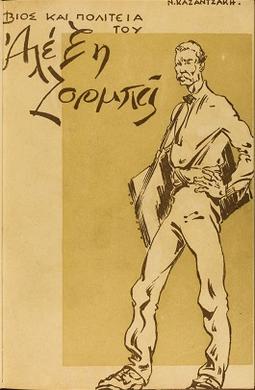
Zorba the Greek by Nikos Kazantzakis
Theodoros Kafantaris
Published on July 07, 2026
Introduction: Teach Me to Dance
"Life is trouble. Only death is not. To be alive is to undo your belt and look for trouble." Alexis Zorba speaks these words, and with them, Nikos Kazantzakis's Zorba the Greek (1946) announces itself as a book about the art of living. The narrator, a bookish intellectual known only as "the Boss," has come to Crete to run a lignite mine. He meets Zorba, a 65-year-old workman of immense vitality, and their friendship becomes a spiritual education—for the Boss, and for the reader.
Zorba the Life Force
Zorba is one of literature's great creations. He eats with abandon, dances when language fails, plays the santuri with primitive genius, loves women without shame, and faces every disaster with a mad laugh. He is not educated—he can barely read—but he possesses a wisdom that the Boss's books cannot contain. "I've stopped thinking all the time," Zorba says. "A man needs a little madness, or else he never dares cut the rope and be free."
The Body and the Spirit
Kazantzakis, a Greek writer who was excommunicated by the Orthodox Church and nearly won the Nobel Prize, believed that the conflict between flesh and spirit was the central drama of human existence. Zorba represents the flesh—not as sin, but as sacred. The Boss represents the spirit—not as transcendence, but as escape. Their friendship suggests that wisdom lies in embracing both.
Dance as Philosophy
When words fail Zorba, he dances. After the catastrophic failure of their mining enterprise, Zorba asks the Boss to teach him to dance. The Boss, who has never danced, instead asks Zorba to teach him. They dance together on the beach, two men who have lost everything and found something greater. "I felt once more how simple and frugal a thing is happiness," the Boss reflects. The novel ends with the same request: "Teach me to dance."
Key Takeaways
- Live fully in the present: Zorba teaches that the only time is now.
- The body is sacred: Physical joy is not opposed to spiritual depth—it is spiritual depth.
- Dance when words fail: Some truths can only be expressed through movement.
- Failure is not defeat: The mine collapses, but Zorba and the Boss are richer for having tried.


