
Μαχαμπαράτα του Βιάσα
Theodoros Kafantaris
Δημοσιεύτηκε στις July 08, 2026
1. Εισαγωγή
Με περίπου 100.000 στίχους—σχεδόν επτά φορές το μήκος της Ιλιάδας και της Οδύσσειας μαζί—το Μαχαμπαράτα είναι το μακρύτερο επικό ποίημα στην παγκόσμια λογοτεχνία. Αποδίδεται στον σοφό Βιάσα και αφηγείται τον μεγάλο πόλεμο μεταξύ δύο κλάδων μιας βασιλικής οικογένειας: των Παντάβα και των Καουράβα. Αλλά ο πόλεμος καταλαμβάνει μόνο ένα μέρος του έπους. Γύρω του υπάρχουν μύθοι, φιλοσοφικοί διάλογοι και η Μπαγκαβάτ Γκίτα—η συμβουλή του Κρίσνα στον πολεμιστή Αρτζούνα την παραμονή της μάχης.
2. Σχετικά με τον Συγγραφέα
Ο Βιάσα, γνωστός και ως Βενταβιάσα, είναι μια ημιμυθική μορφή στην ινδική παράδοση. Θεωρείται ο συγγραφέας του Μαχαμπαράτα, καθώς και ο συντάκτης των Βεδών και ο συγγραφέας των Πουρανών. Σύμφωνα με τον μύθο, ήταν γιος του σοφού Παρασάρα και της ψαράδας Σατυαβάτι. Δίδαξε τις Βέδες στους μαθητές του και συνέθεσε το έπος σε μια σπηλιά στα Ιμαλάια. Η παράδοση τον τοποθετεί στην εποχή του πολέμου, περίπου 3000 π.Χ., αν και η σύγχρονη έρευνα χρονολογεί το κείμενο μεταξύ 400 π.Χ. και 400 μ.Χ.
3. Περίληψη της Ιστορίας
Το Μαχαμπαράτα αφηγείται την ιστορία δύο αντιμαχόμενων κλάδων της βασιλικής οικογένειας των Μπαράτα: τους Παντάβα (πέντε αδελφούς: Γιουντιστίρα, Μπίμα, Αρτζούνα, Νακούλα και Σαχαντέβα) και τους Καουράβα (εκατό αδελφούς με αρχηγό τον Ντουριοντάνα). Η διαμάχη ξεκινά από τη διεκδίκηση του θρόνου της Χαστιναπούρα. Οι Παντάβα, αν και νόμιμοι κληρονόμοι, χάνουν το βασίλειό τους σε ένα στημένο παιχνίδι ζαριών και εξορίζονται για δεκατρία χρόνια. Μετά την εξορία, ζητούν πίσω το βασίλειό τους, αλλά ο Ντουριοντάνα αρνείται, οδηγώντας στον μεγάλο πόλεμο στο Κουρουκσέτρα.
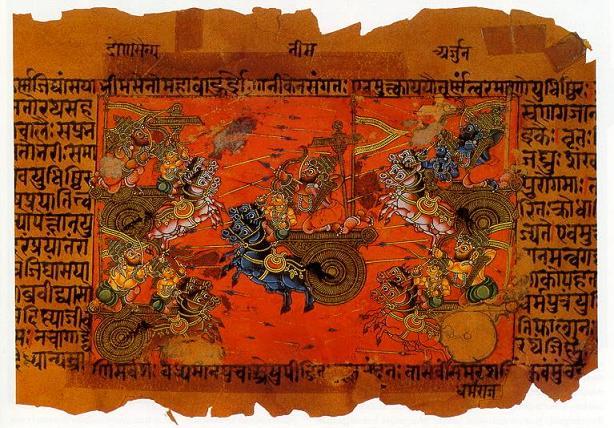
Ο πόλεμος διαρκεί δεκαοκτώ ημέρες και περιλαμβάνει επικές μάχες, στρατηγικές και ηρωικές θυσίες. Στο κέντρο του έπους βρίσκεται η Μπαγκαβάτ Γκίτα, όπου ο Κρίσνα, ως ηνίοχος του Αρτζούνα, τον διδάσκει για το καθήκον, τη δράση χωρίς προσκόλληση και την αιώνια φύση της ψυχής. Μετά τον πόλεμο, οι Παντάβα θριαμβεύουν, αλλά το κόστος είναι τεράστιο: σχεδόν όλοι οι ήρωες και από τις δύο πλευρές σκοτώνονται. Ο Γιουντιστίρα στέφεται βασιλιάς, αλλά η νίκη είναι πικρή.
Το έπος δεν περιορίζεται στον πόλεμο. Περιλαμβάνει πολυάριθμες υποπλοκές, μύθους και φιλοσοφικούς διαλόγους. Θέματα όπως το καθήκον (ντάρμα), η μοίρα, η δικαιοσύνη και η φύση της πραγματικότητας διαπερνούν το κείμενο. Χαρακτήρες όπως ο Μπίσμα, η Ντραουπάντι και ο Κάρνα προσθέτουν βάθος, ενώ σκηνές όπως η απόπειρα γδύσιμου της Ντραουπάντι και ο θάνατος του Μπίσμα είναι συγκλονιστικές. Η αφήγηση είναι κυκλική, με ιστορίες μέσα σε ιστορίες, δημιουργώντας ένα πολυεπίπεδο αφηγηματικό σύμπαν.
4. Βασικά Συμπεράσματα
- Κανείς δεν είναι απόλυτα δίκαιος στον πόλεμο: Το Μαχαμπαράτα αρνείται εύκολες ηθικές κρίσεις. Και οι δύο πλευρές διαπράττουν φρικαλεότητες. Οι «καλοί» Παντάβα κερδίζουν μέσω εξαπάτησης. Ο μεγάλος ήρωας Μπίσμα, που γνωρίζει τη σωστή πορεία, δεσμεύεται από την πίστη του στη λάθος πλευρά.
- Η Γκίτα διδάσκει δράση χωρίς προσκόλληση: Η διδασκαλία του Κρίσνα στον Αρτζούνα—ότι πρέπει να δρα κανείς χωρίς προσκόλληση στα αποτελέσματα—προκύπτει από την αναγνώριση ότι σε έναν πεσμένο κόσμο, καμία πράξη δεν είναι εντελώς αγνή. Το σκοτάδι του έπους είναι η σοφία του.
- Ένα έπος μπορεί να περιέχει ένα σύμπαν: Το Μαχαμπαράτα δεν είναι απλώς μια ιστορία πολέμου, αλλά μια εγκυκλοπαίδεια της ινδικής κουλτούρας, φιλοσοφίας και μυθολογίας. Περιλαμβάνει μύθους, νόμους, πολιτικές θεωρίες και πνευματικές διδασκαλίες, καθιστώντας το ένα ολοκληρωμένο έργο που αντανακλά την πολυπλοκότητα της ζωής.
5. Γιατί Αυτό το Βιβλίο Είναι Απαραίτητο να Διαβαστεί
Το Μαχαμπαράτα είναι απαραίτητο για όποιον θέλει να κατανοήσει την ινδική σκέψη και τον πολιτισμό. Ως ένα από τα θεμελιώδη κείμενα του Ινδουισμού, προσφέρει βαθιές γνώσεις για την ανθρώπινη φύση, το καθήκον και την ηθική. Η αφήγησή του είναι συναρπαστική, γεμάτη δράση, δράμα και φιλοσοφία. Επιπλέον, η Μπαγκαβάτ Γκίτα που περιέχεται σε αυτό είναι ένα αυτόνομο πνευματικό κλασικό. Η ανάγνωση του Μαχαμπαράτα είναι μια εμπειρία που διευρύνει τον ορίζοντα και αμφισβητεί τις βεβαιότητες, καθιστώντας το ένα διαχρονικό αριστούργημα.


