
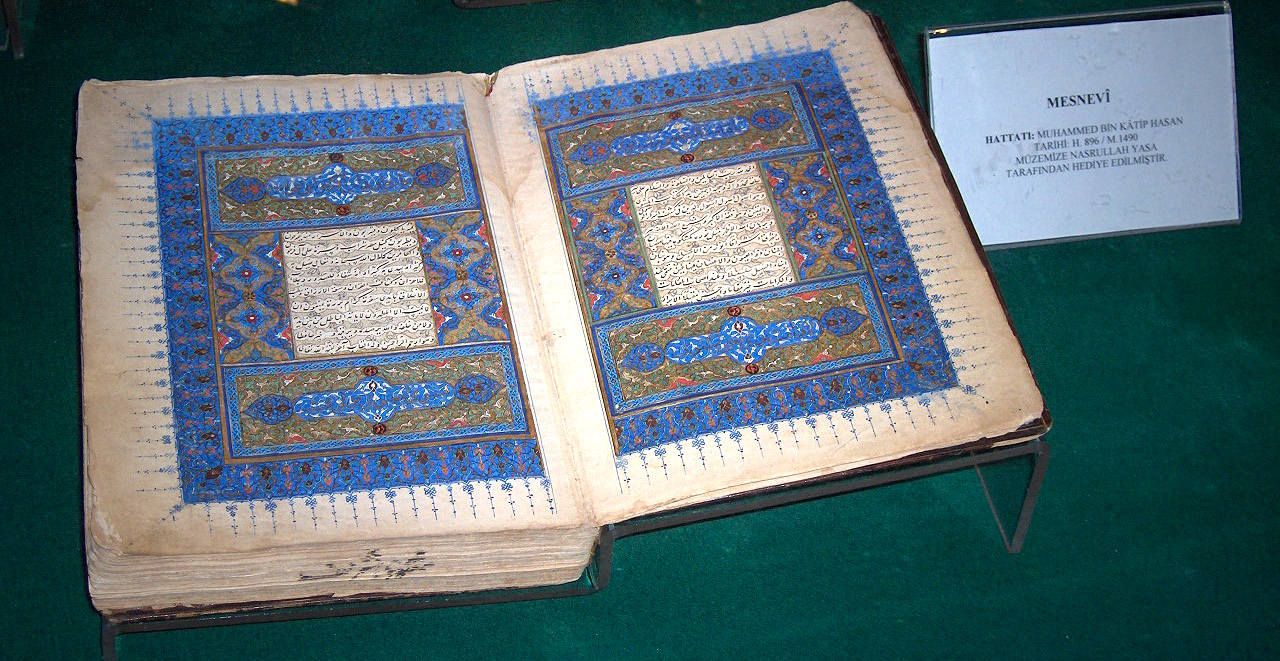
Μασναβί του Ρουμί
Theodoros Kafantaris
Δημοσιεύτηκε στις July 08, 2026
1. Εισαγωγή
Ο Τζαλάλ αλ-Ντιν Ρουμί (1207-1273) συνέθεσε το Μασναβί-γιε Μα'ναβί («Πνευματικοί Δίστιχοι») κατά τα τελευταία χρόνια της ζωής του, υπαγορεύοντας σε έναν γραφέα καθώς περπατούσε, χόρευε ή καθόταν δίπλα σε ένα σιντριβάνι. Τα έξι βιβλία που προέκυψαν αποτελούν μια συλλογή σοφίας των Σούφι: ιστορίες μέσα σε ιστορίες, παραβολές, ανέκδοτα και εκστατική ποίηση, όλα δείχνοντας προς την κεντρική αλήθεια της θεϊκής αγάπης. Συχνά αποκαλούμενο «το Κοράνι στα Περσικά», είναι ένα από τα πιο αγαπημένα έργα του ισλαμικού μυστικισμού.
2. Σχετικά με τον Συγγραφέα
Ο Τζαλάλ αλ-Ντιν Ρουμί γεννήθηκε στο Μπαλχ (σημερινό Αφγανιστάν) και αργότερα εγκαταστάθηκε στο Ικόνιο (σημερινή Τουρκία). Ήταν ένας σεβαστός ισλαμιστής λόγιος μέχρι που συνάντησε τον περιπλανώμενο δερβίση Σαμς Ταμπρίζι, ο οποίος τον μεταμόρφωσε σε έναν εκστατικό ποιητή και μυστικιστή. Μετά την εξαφάνιση του Σαμς, ο Ρουμί εξέφρασε τον πόνο του μέσα από την ποίηση και τον χορό, ιδρύοντας το τάγμα των Μεβλεβί δερβίσηδων. Το Μασναβί θεωρείται το αριστούργημά του, μια σύνθεση σούφικης διδασκαλίας και ποιητικής τέχνης.
3. Περίληψη της Ιστορίας
Το Μασναβί δεν είναι μια ενιαία αφήγηση, αλλά μια συλλογή από δεκάδες ιστορίες που συνδέονται θεματικά. Ξεκινά με το περίφημο «Τραγούδι του Αυλού από Καλάμι», όπου ο αυλός θρηνεί τον αποχωρισμό του από το καλαμιώνα, συμβολίζοντας την ανθρώπινη ψυχή που λαχταρά να επιστρέψει στη θεϊκή πηγή. Αυτό το εισαγωγικό ποίημα θέτει τον τόνο για ολόκληρο το έργο: κάθε ιστορία είναι μια παραλλαγή του θέματος του χωρισμού και της επανένωσης.
Μεταξύ των πιο γνωστών ιστοριών είναι αυτή του εμπόρου και του παπαγάλου, όπου ένας έμπορος ταξιδεύει στην Ινδία και φέρνει πίσω ένα μήνυμα από έναν παπαγάλο που οδηγεί στην απελευθέρωση του δικού του πουλιού. Η ιστορία διδάσκει ότι η αληθινή ελευθερία έρχεται μέσω της πνευματικής αφύπνισης. Μια άλλη διάσημη ιστορία είναι αυτή του Μωυσή και του βοσκού, όπου ο Μωυσής επιπλήττει έναν βοσκό για την ανθρωπόμορφη αντίληψή του για τον Θεό, αλλά αργότερα μαθαίνει ότι ο Θεός αποδέχεται κάθε ειλικρινή λατρεία, ανεξάρτητα από τη μορφή της.
Η αφηγηματική δομή είναι σπειροειδής: ο Ρουμί συχνά διακόπτει μια ιστορία για να εισαγάγει μια άλλη, σχολιάζοντας και συνδέοντας διαφορετικά επίπεδα νοήματος. Μέσα από αυτές τις ιστορίες, εξερευνά θέματα όπως η ταπείνωση, η αγάπη, η πίστη, η υπομονή και η ενότητα της ύπαρξης. Οι χαρακτήρες περιλαμβάνουν προφήτες, βασιλιάδες, ζητιάνους, ζώα και μυθικά όντα, όλοι τους φορείς διδακτικών μηνυμάτων. Η ποιητική γλώσσα του Ρουμί είναι πλούσια σε μεταφορές και σύμβολα, κάνοντας την πνευματική διδασκαλία προσιτή και συγκινητική.
4. Βασικά Συμπεράσματα
- Ο χωρισμός είναι η θεμελιώδης κατάσταση της ψυχής: Η ανθρώπινη ύπαρξη χαρακτηρίζεται από μια βαθιά λαχτάρα για ένωση με το Θείο, που εκφράζεται μέσα από την αλληγορία του αυλού από καλάμι.
- Οι ιστορίες είναι δοχεία για την αλήθεια: Ο Ρουμί χρησιμοποιεί αφηγήσεις για να μεταδώσει πνευματικές έννοιες, καθιστώντας τις προσιτές σε όλους, ανεξαρτήτως μόρφωσης.
- Η θεϊκή αγάπη είναι ο προορισμός όλων των ταξιδιών: Κάθε ιστορία οδηγεί στην ίδια αλήθεια: η αγάπη είναι η κινητήρια δύναμη του σύμπαντος και ο τελικός σκοπός της ανθρώπινης ζωής.
5. Γιατί Αυτό το Βιβλίο Είναι Απαραίτητο να Διαβαστεί
Το Μασναβί είναι ένα διαχρονικό έργο που υπερβαίνει τα πολιτισμικά και θρησκευτικά όρια. Προσφέρει βαθιά πνευματική καθοδήγηση μέσα από συναρπαστικές ιστορίες και ποιητική ομορφιά. Είτε ο αναγνώστης αναζητά σοφία, παρηγοριά ή απλώς μια αισθητική απόλαυση, το Μασναβί έχει κάτι να προσφέρει. Η επιρροή του στην παγκόσμια λογοτεχνία και φιλοσοφία είναι ανυπολόγιστη, και η ανάγνωσή του είναι μια εμπειρία που μεταμορφώνει.


