
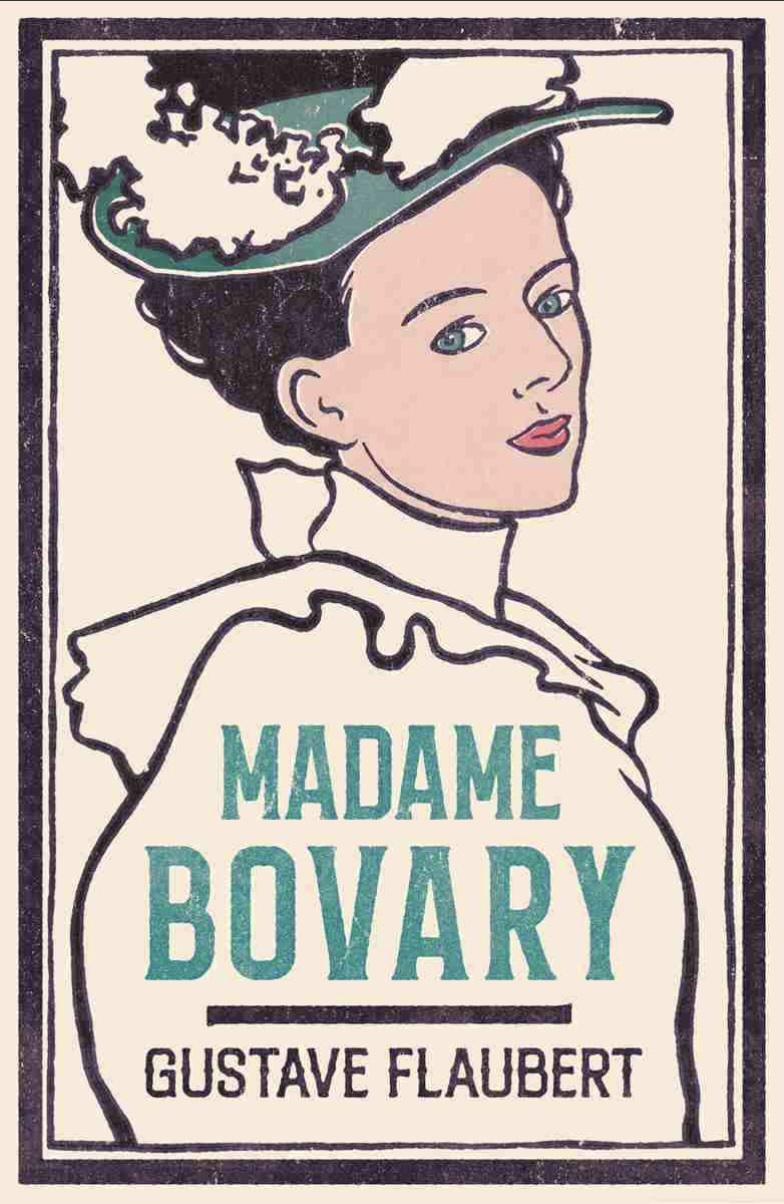
Madame Bovary by Gustave Flaubert
Theodoros Kafantaris
Published on December 26, 2025
1. Introduction
Before there was Desperate Housewives or Sex and the City, there was Emma Bovary. Published in 1856, Madame Bovary is the novel that effectively invented modern realism. It caused a massive scandal upon release—Flaubert was literally put on trial for obscenity—because it dared to treat adultery not as a moral failing to be preached against, but as a symptom of a bored, unsatisfied life.
This is not a romantic love story; it is the anti-romance. It is a razor-sharp critique of the devastating gap between our dreams and our reality. It is significant because Flaubert shifted the focus of literature from epic heroes to the quiet, desperate lives of ordinary people, rendering the mundane details of provincial life with breathtaking precision.
2. About the Author
Gustave Flaubert (1821–1880) Flaubert was a perfectionist of the highest order. He famously spent days agonizing over a single sentence, searching for le mot juste (the exact right word). He despised the bourgeoisie (the middle class) and their perceived mediocrity, yet he spent years writing the definitive novel about them.
He was a central figure in the shift from Romanticism (which emphasized emotion and individualism) to Realism (which focused on everyday truth). Flaubert didn't want to judge his characters; he wanted to dissect them like a scientist. He famously said, "Madame Bovary, c'est moi" ("Madame Bovary is me"), admitting that Emma’s restless longing was a reflection of his own artistic dissatisfaction.
3. Story Overview
The Bored Wife
Emma Rouault, a young woman raised on a diet of sentimental romance novels, marries Charles Bovary, a decent but dull country doctor. She expects marriage to be a whirlwind of passion, poetry, and midnight confessions. Instead, she gets dinner conversations about agriculture and the sound of Charles snoring.
Trapped in the sleepy village of Tostes (and later Yonville), Emma spirals into depression. She craves luxury, excitement, and a life that resembles the books she reads. Charles, who adores her, is completely oblivious to her misery, which only makes her despise him more.
The Search for Passion
Desperate to feel something, Emma embarks on a series of affairs. First, she falls for Rodolphe Boulanger, a wealthy landowner who sees her as a pretty conquest. Emma convinces herself this is true love and plans to run away with him, but Rodolphe, bored by her intensity, abandons her with a cruel letter on the eve of their departure.
Shattered but undeterred, she later begins an affair with Léon Dupuis, a young law clerk. She spins a web of lies to meet him in secret, spending money she doesn't have on hotel rooms and gifts to fuel the fantasy of a high-society romance.
The Inevitable Crash
Emma’s tragedy is twofold: emotional and financial. While chasing the high of romance, she falls prey to Lheureux, a manipulative merchant who lends her money at exorbitant rates. She buys expensive clothes and furniture to fill the void in her soul, sinking deeper into debt.
Eventually, the bill comes due. Abandoned by her lovers and facing public ruin and seizure of her property, Emma realizes there is no white knight coming to save her. In a final, harrowing act of desperation, she swallows arsenic. Flaubert describes her agonizing death in clinical, gruesome detail—a stark contrast to the romanticized suicide she likely imagined for herself.
4. Key Takeaways
-
The Danger of Romantic Illusions: Emma destroys her life because she tries to force reality to match the fictional worlds of romance novels.
-
Insight: Constantly comparing your real life to an idealized fantasy is a recipe for perpetual unhappiness.
-
-
The Trap of Consumerism: Emma tries to buy happiness with curtains, dresses, and trinkets, mistaking material luxury for emotional fulfillment.
-
Insight: Retail therapy is a temporary bandage that often leads to deeper wounds.
-
-
The Banality of Evil (and Good): Charles is good but boring; Rodolphe is exciting but cruel.
-
Insight: Flaubert challenges us to see that "excitement" is often superficial, while genuine devotion often looks mundane.
-
-
The Constraints on Women: The novel highlights the limited options available to women in the 19th century.
-
Insight: Without a career or agency, Emma’s intelligence and ambition curdle into neurosis and destruction.
-
5. Why This Book Is a Must Read
Madame Bovary is the grandmother of the modern novel. It belongs on the '100 Books You Must Read' list because it is a masterclass in style and observation. Flaubert turned the English language (or French, originally) into a camera, capturing the dust on the furniture and the sweat on a brow with high-definition clarity.
But beyond the style, it is a timeless psychological portrait. We have all met an Emma Bovary—or perhaps been her. We have all felt that itch of dissatisfaction, that belief that "real life" is happening somewhere else, at a better party, with better people. Flaubert holds up a mirror to our own desires and asks us to look closely at what we are really chasing.

