
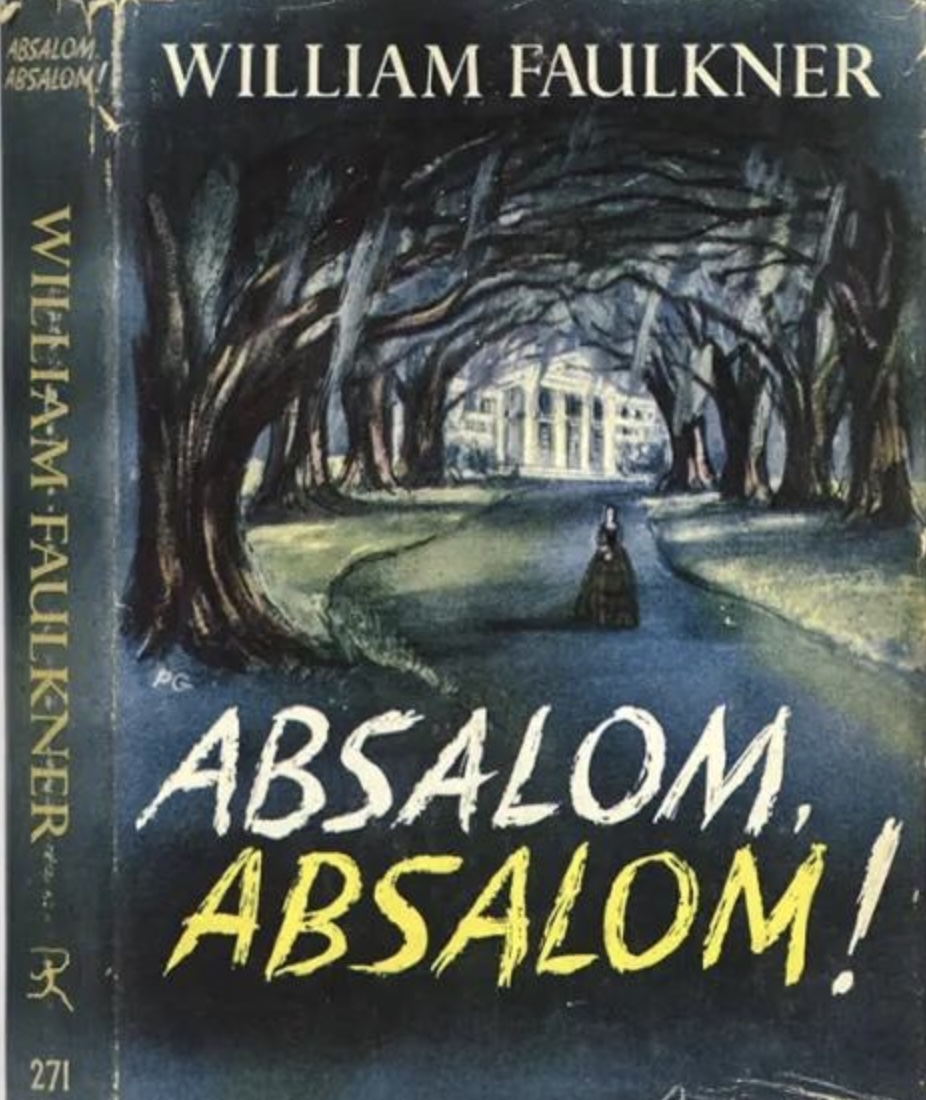
Absalom, Absalom! by William Faulkner
Theodoros Kafantaris
Published on December 24, 2025
1. Introduction
If you are looking for a light beach read, keep walking. But if you want a book that will rewire your brain, challenge your perception of truth, and haunt you long after you turn the final page, welcome to Absalom, Absalom!.
Published in 1936, this is arguably William Faulkner’s masterpiece and the crown jewel of Southern Gothic literature. It is a mystery story, a family tragedy, and a ghost story all rolled into one dizzying narrative. It asks the ultimate question: How do we know the truth about the past when all we have are memories and rumors? Set against the backdrop of the American South before, during, and after the Civil War, Absalom, Absalom! isn't just a story about a family; it is an autopsy of the Southern soul.
2. About the Author
William Faulkner (1897–1962) A giant of American letters and a Nobel Prize winner, William Faulkner is the undisputed king of Southern literature. He spent most of his life in Oxford, Mississippi, which he fictionalized as "Jefferson" in his legendary Yoknapatawpha County—the setting for most of his novels.
Faulkner is famous (and occasionally infamous) for his difficult, modernist style. He loved stream-of-consciousness narration, fractured timelines, and sentences that can run for pages. He didn’t write to be difficult for the sake of it; he wrote that way to mimic how the human mind actually works—obsessive, circular, and messy. He captured the decay of the post-Civil War South better than any historian, exploring how the legacy of slavery and defeat weighed on the generations that followed.
3. Story Overview
The Design
The story revolves around Thomas Sutpen, a man who arrives in Jefferson, Mississippi, in 1833 with nothing but a horse, two pistols, and a savage ambition. Sutpen has a "grand design": to establish a dynasty that will outlast him. He ruthlessly cheats a Native American tribe out of one hundred square miles of land (Sutpen’s Hundred), builds a massive plantation, and marries a respectable local woman to secure his social standing.
For a while, it works. He has a son, Henry, and a daughter, Judith. The dynasty seems secure. But Sutpen’s past—specifically a previous marriage he abandoned in the West Indies because his wife had African ancestry—is coming to find him.
The House Divided
The drama ignites when Henry brings home his college friend, the sophisticated and charming Charles Bon. Bon and Judith fall in love, but Sutpen furiously forbids the marriage. He turns Henry against Bon, leading to a rift that sends both young men off to fight in the Civil War together.
This section of the book is told through the eyes of Quentin Compson (a young Harvard student) and his roommate, who are trying to piece together why Sutpen destroyed his own family. Was it just pride? Or was it something darker? The reader slowly realizes that Charles Bon is actually Sutpen’s abandoned son from his first marriage—meaning he is Judith’s half-brother.
The Fall of the House of Sutpen
The climax of the past timeline is tragic and inevitable. Upon returning from the war, Henry murders Charles Bon at the gates of the plantation to prevent the incestuous (and, in the eyes of their society, miscegenous) marriage. Henry flees, Sutpen is left heirless, and the "Grand Design" crumbles into dust.
In the "present" (1909), Quentin Compson visits the decaying Sutpen’s Hundred, where he uncovers the final, dying secrets of the family. The story ends with the total destruction of the house by fire, leaving only a single survivor—Jim Bond, the intellectually disabled mixed-race grandson of Charles Bon—howling in the ashes. The dynasty Sutpen tried to keep "pure" is gone, and the only thing remaining is the very lineage he tried to erase.
4. Key Takeaways
-
The Burden of the Past: The central theme is that we cannot escape history.
-
Insight: The sins of the father are literally and metaphorically visited upon the sons; trying to bury the past only makes it rot and fester.
-
-
The Subjectivity of Truth: The story is told by four different narrators, each with their own biases and gaps in knowledge.
-
Insight: History is not a set of objective facts; it is a story we construct, often telling us more about the storyteller than the event itself.
-
-
The Failure of the "Design": Sutpen tries to control his life like a god, ignoring the humanity of others to achieve his goals.
-
Insight: Ambition without morality or empathy is doomed to catastrophic failure.
-
-
The Legacy of Racism: The novel exposes the deep, structural rot of Southern society caused by slavery and the obsession with racial purity.
-
Insight: A society built on the oppression of others is inherently unstable and will eventually collapse on itself.
-
5. Why This Book Is a Must Read
Absalom, Absalom! is a literary Everest. It belongs on the '100 Books You Must Read' list because it forces you to work for your understanding, and the payoff is immense. It is arguably the greatest American novel about the consequences of the Civil War and the tangled roots of racism.
While the prose can be challenging, it is also hypnotic. Faulkner captures the feeling of being trapped in a stifling, hot room with ghosts whispering in your ear. It teaches us that to understand ourselves, we must understand where we came from, even if looking back is painful. It is a profound, devastating, and essential work of art.

