
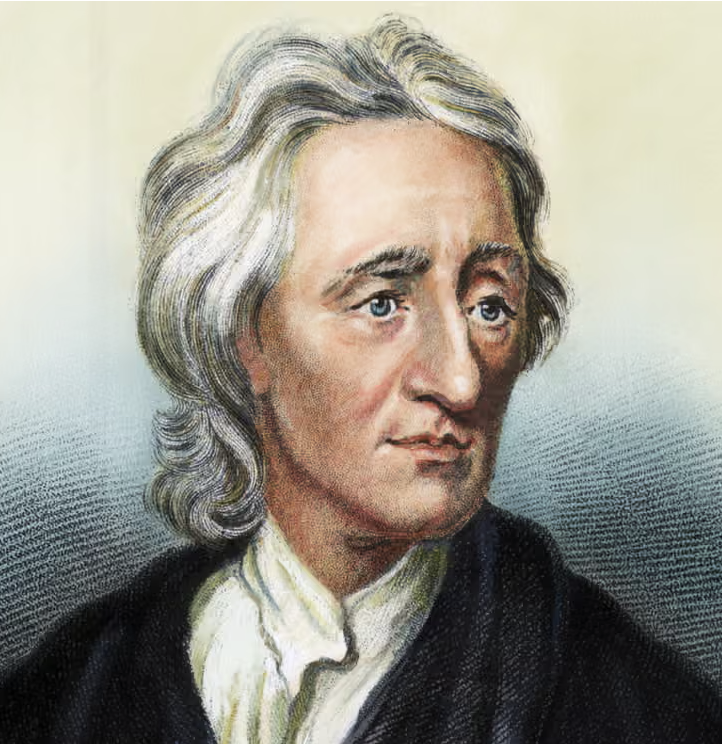
John Locke — Freedom, Identity, and Human Rights
Theodoros Kafantaris
Published on December 22, 2025
The philosopher whose ideas built the foundations of liberty and individuality
Imagine a world where the very concept of freedom, equality, and personal rights was not yet widely recognized—a world where rulers claimed absolute power, and ordinary people had little voice. Into this world stepped John Locke, an English thinker whose ideas would ripple across centuries, inspiring revolutions, constitutions, and the very notion that every person has intrinsic worth.
Locke’s life reminds us that ideas are powerful—they can reshape society, and they can empower each individual to think, act, and live freely.
The Life of the Thinker
John Locke was born in 1632 in Somerset, England. His early years were shaped by the turbulence of civil war and political unrest, which planted seeds of curiosity about government, authority, and human nature.
Locke studied medicine and philosophy, but his true passion was understanding how humans know, how we form societies, and how freedom can coexist with order. Unlike many philosophers who focused on abstract ideals, Locke combined observation, reason, and moral reflection to tackle real-world problems.
Core Ideas of John Locke
Locke’s philosophy laid the groundwork for modern democracy, human rights, and personal freedom. His key concepts include:
1. Tabula Rasa — The Blank Slate
Locke believed that humans are born without innate ideas; our minds are like blank slates, shaped by experience and learning. This revolutionary idea emphasized the power of education, reflection, and environment in forming identity.
2. Natural Rights
Locke argued that all people are born with certain inalienable rights: life, liberty, and property. Governments exist not to rule arbitrarily, but to protect these rights. If they fail, citizens have the moral right to challenge authority.
3. Social Contract
Societies are built on mutual agreement. People consent to governments to ensure security and fairness, but sovereignty ultimately belongs to the people. Locke’s theory became a blueprint for democratic governance and civil liberties.
4. Freedom and Individuality
For Locke, freedom was not chaos; it was the ability to think, speak, and act responsibly. Individual conscience, moral reasoning, and personal responsibility are central to a just society.
Why Locke Matters Today
Locke’s ideas transformed the way we view ourselves and our place in society:
-
Human Rights: His philosophy underpins modern constitutions and international law.
-
Education: Learning shapes character, skills, and opportunities—Locke’s blank slate reminds us of our potential.
-
Personal Empowerment: Every person has value and the ability to influence their destiny.
-
Government and Society: Citizens have both rights and responsibilities, and ethical governance is essential.
In short, Locke inspires us to live thoughtfully, value freedom, and recognize our role in shaping a just world.
Bringing Locke Into Your Life
Even without studying politics or philosophy deeply, Locke’s teachings can guide everyday living:
⭐ 1. Reflect on your beliefs
Recognize that much of what you know is learned—question, explore, and grow continuously.
⭐ 2. Value your freedom
Act responsibly, make choices consciously, and respect the freedom of others.
⭐ 3. Protect what matters
Defend your integrity, your ideas, and your well-being.
⭐ 4. Contribute to society
Understand that living freely comes with responsibility to your community.
⭐ 5. Embrace lifelong learning
Your mind is a blank slate; curiosity and reflection shape who you become.
An Inspirational Takeaway
John Locke teaches us that freedom and responsibility are inseparable, that every person has inherent value, and that knowledge is a tool for growth, choice, and empowerment.
If Socrates gave us courage, Plato gave us vision, and Aristotle gave us balance, Locke gives us the confidence to claim our own minds and our own lives.
A Quote to Reflect On
“The end of law is not to abolish or restrain, but to preserve and enlarge freedom.”
— John Locke
A reminder that freedom is meaningful only when guided by reason and responsibility.


