
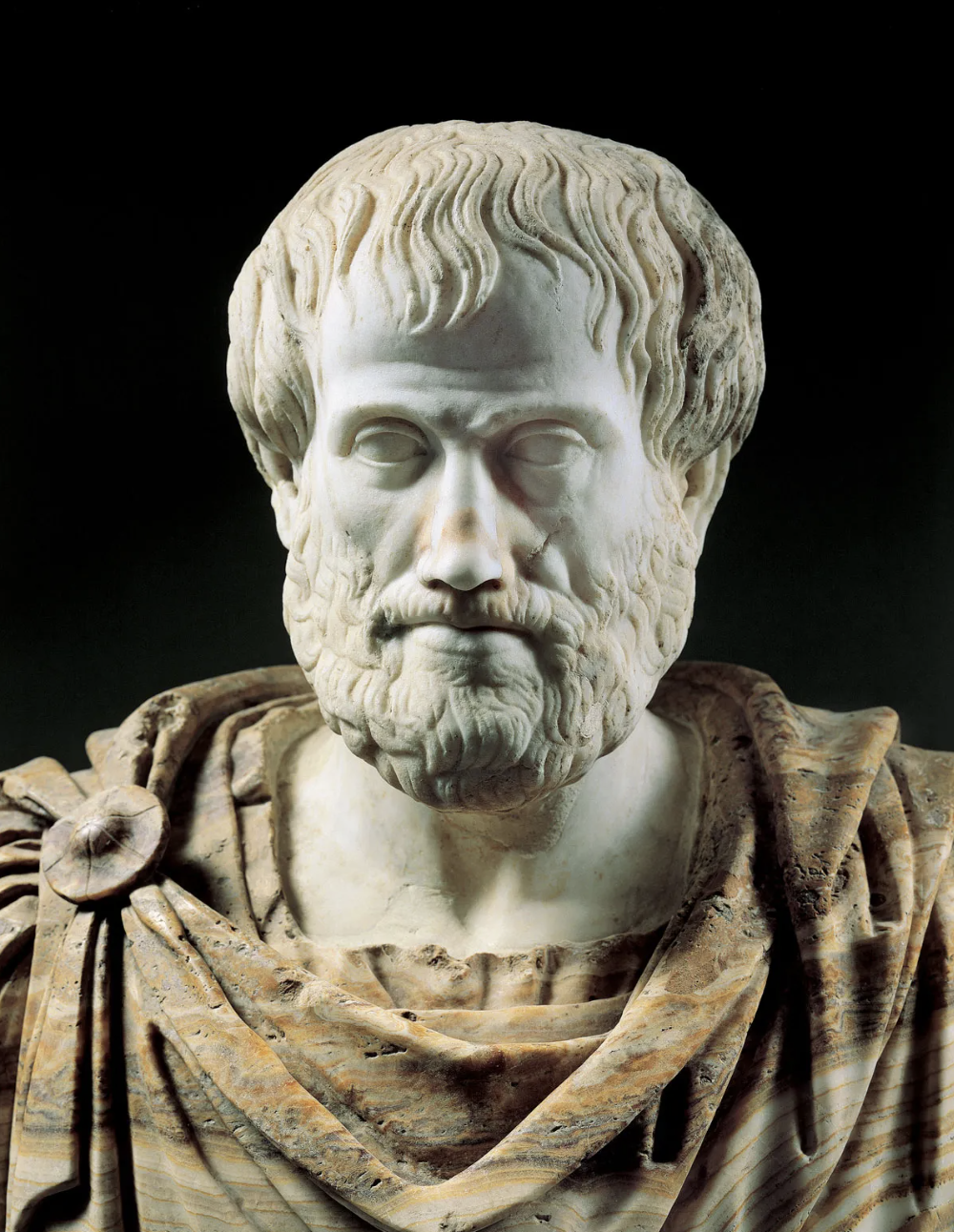
Aristotle — The Art of Living with Balance
Theodoros Kafantaris
Published on December 08, 2025
Turning ideals into action: lessons from the philosopher of life itself
Imagine walking into a vast garden, perfectly designed—flowers blooming in harmony, paths flowing gracefully, sunlight illuminating every corner. Every plant, every stone, every bird seems in its right place. This is the world Aristotle invites us into: a world where life is an art, and happiness is a skill we can learn.
Unlike his teacher Plato, who looked to the eternal world of ideals, Aristotle’s gaze was fixed on life as it is. He believed philosophy was not just about dreaming—it was about living wisely.
The Student of Plato Who Carved His Own Path
Aristotle was born in 384 BCE in Stagira, a small town in northern Greece. He joined Plato’s Academy in Athens as a young man, absorbing lessons about truth, justice, and the Forms. But Aristotle was different. While Plato looked upward to the ideal, Aristotle looked around, observing the world meticulously—plants, animals, politics, humans, and even the stars.
Where Plato asked “What is the ideal?”, Aristotle asked “How do we live well here, now?” His mind sought patterns, causes, and practical wisdom—a bridge between thought and action.
The Golden Mean — Finding Balance in Life
Aristotle’s most famous lesson is the Golden Mean: the idea that virtue lies in balance between extremes.
Think of courage:
-
Too little courage = cowardice
-
Too much courage = recklessness
-
Just the right amount = bravery
Or generosity:
-
Too little = stinginess
-
Too much = wastefulness
-
Just the right amount = true generosity
Aristotle’s insight is simple but revolutionary: a good life is not about extremes; it’s about finding harmony in all things.
This isn’t just abstract theory—it’s a practical guide to daily living. Every choice, every action, every habit is an opportunity to practice balance.
Ethics, Happiness, and the Good Life
For Aristotle, the goal of life is eudaimonia—often translated as happiness, flourishing, or thriving. But eudaimonia is not about fleeting pleasure or success; it’s about living fully in accordance with virtue.
Happiness is earned, not given. It grows from:
-
Character: cultivating honesty, courage, and kindness
-
Mind: engaging in reflection and learning
-
Community: living in harmony with others
-
Action: practicing virtues consistently in everyday life
Aristotle teaches that philosophy isn’t just thinking; it’s doing. Ideals are meaningful only when they guide action.
The Polymath Who Studied Everything
Aristotle’s curiosity knew no bounds. He studied:
-
Biology, observing hundreds of species
-
Physics, exploring motion and causality
-
Politics, examining constitutions and governance
-
Arts, poetry, and rhetoric
His systematic approach to knowledge became the foundation of science and reason for centuries. For Aristotle, wisdom was comprehensive: the mind, body, and society were connected, and understanding one required understanding the whole.
Why Aristotle Matters Today
Aristotle’s teachings are timeless because they are practical:
-
Decision-Making: Finding balance helps us make wiser choices
-
Personal Growth: Virtue is a skill, not a trait you’re born with
-
Relationships: Harmony and fairness create stronger communities
-
Work & Life: Excellence comes from habits, not luck
In a fast-paced, chaotic world, Aristotle’s message is grounding: happiness isn’t external. It is cultivated in the rhythms of daily life, in deliberate, balanced action.
Bringing Aristotle Into Your Life
Even without studying Greek texts, you can apply Aristotle’s wisdom:
⭐ 1. Seek balance
Notice extremes in your life and adjust toward the middle path.
⭐ 2. Practice virtue daily
Courage, patience, honesty, generosity—small, repeated actions shape character.
⭐ 3. Reflect regularly
Take time to think about your choices, successes, and failures.
⭐ 4. Engage fully in your community
Life is richer when you participate, contribute, and connect.
⭐ 5. Treat life as art
Every moment is a chance to practice excellence, turning ordinary life into something extraordinary.
An Inspirational Takeaway
Aristotle reminds us that life is not a matter of luck or lofty dreams—it is a craft, a journey of mindful, deliberate action. Happiness isn’t something you stumble upon; it’s something you create, moment by moment, habit by habit.
If Socrates gave us the courage to question, and Plato gave us the vision to dream, Aristotle gives us the map to live those dreams wisely.
A Quote to Reflect On
“We are what we repeatedly do. Excellence, then, is not an act, but a habit.”
— Aristotle


