
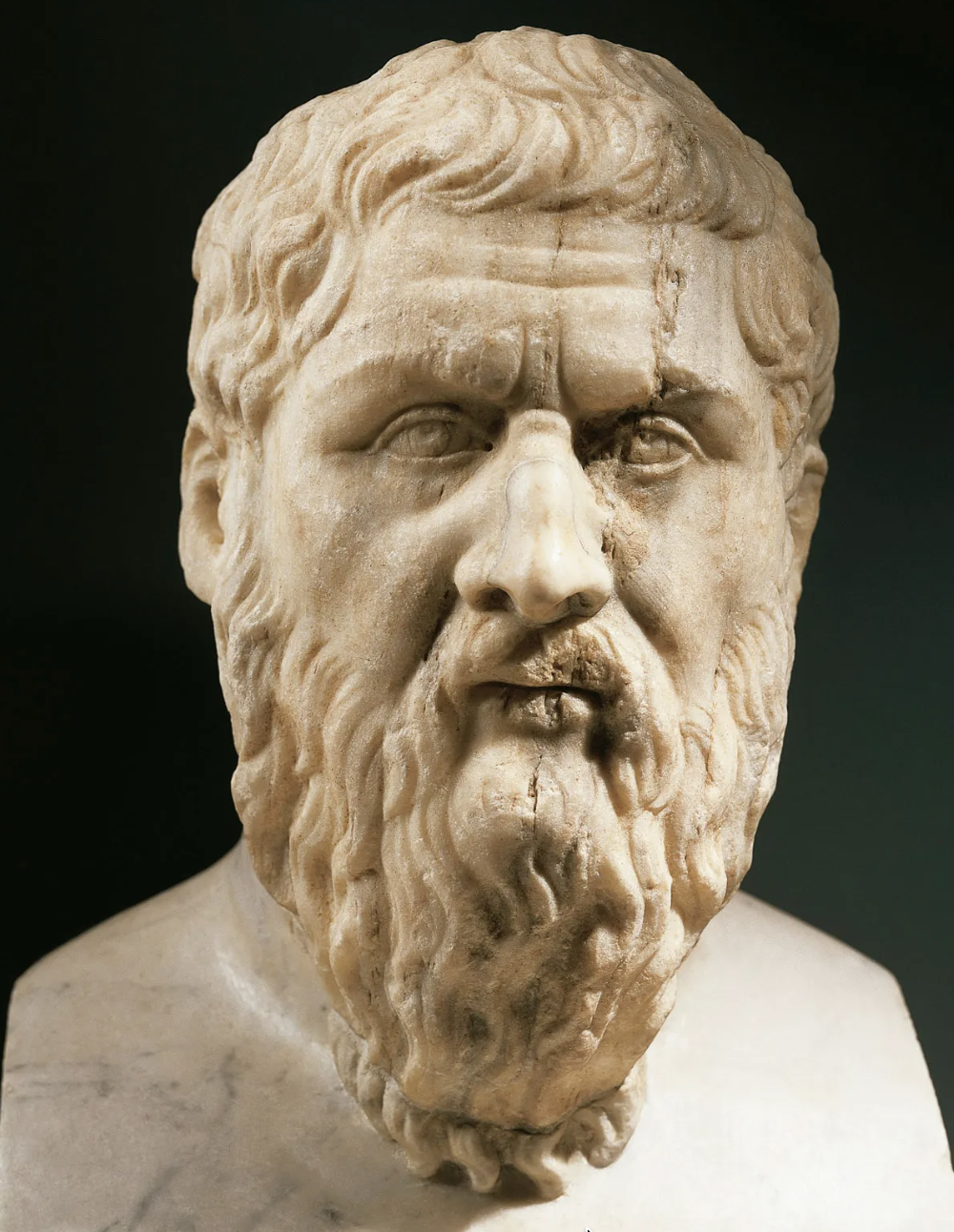
Plato — The Power of Ideals
Theodoros Kafantaris
Published on December 01, 2025
Exploring the visionary mind that shaped Western thought
Imagine walking into a world where ideas had power beyond kings and armies, a realm where the unseen shapes the seen. This was the world Plato created in his mind—and in his writings. Plato, a student of Socrates, inherited the courage to question but transformed it into something larger: a vision of a world guided by truth, beauty, and justice.
He didn’t just ask questions—he dreamed of answers that could change humanity.
The Student Who Became a Visionary
Plato was born in Athens around 428 BCE, into a family connected to politics. He could have followed a life of power, wealth, and influence. Instead, a chance meeting with Socrates changed everything.
Socrates’ questions awakened in Plato a passion for truth. But unlike Socrates, Plato wanted to capture and share those ideas for generations to come. Through dialogues—stories of conversations, debates, and reflection—he preserved Socrates’ wisdom while building his own vision of philosophy.
Plato’s life was not about comfort; it was about the pursuit of the extraordinary.
The World of Forms — Ideas That Shape Reality
Plato’s most famous idea is the Theory of Forms. He believed the world we see is only a shadow of a deeper reality, a world of perfect, eternal “Forms.”
Think of it like this:
-
A chair you see in your room is imperfect, temporary, and flawed.
-
The “Form of a Chair” is perfect, eternal, and unchanging—the blueprint that gives every real chair its essence.
For Plato, the same principle applied to justice, beauty, goodness, and love. The world we experience is fleeting, but the ideals behind it are eternal.
This vision might sound abstract, but its inspiration is profound: to live well, we must aim not just for what is convenient or popular, but for what is true and good at its highest level.
The Academy — A School for the Soul
Plato didn’t just write; he taught. Around 387 BCE, he founded the Academy, the world’s first known institution of higher learning.
It wasn’t just a school of facts; it was a school of thinking, questioning, and envisioning a better world. Here, students learned to see beyond appearances, reason carefully, and align their lives with eternal truths.
The Academy survived centuries and influenced countless thinkers, including Aristotle. Plato’s dream was bigger than himself: a society guided by wisdom.
The Allegory of the Cave — Awakening to Truth
Plato’s Allegory of the Cave is one of the most powerful metaphors in philosophy. Imagine prisoners chained in a dark cave, seeing only shadows on a wall. To them, shadows are reality.
One prisoner escapes, sees the sun, and realizes the true world outside. When he returns to tell the others, they resist, preferring the shadows they know.
The cave is all of us, Plato said. We often mistake appearances, habits, and distractions for truth. Awakening requires courage, curiosity, and a willingness to see beyond comfort.
Inspiration here is clear: your mind is your cave, and your curiosity can be your escape.
Why Plato Matters Today
Plato’s vision continues to shape modern life:
-
Ethics & Leadership: His idea of the “philosopher-king” inspires leaders who prioritize wisdom over power.
-
Education: Learning to think, not just memorize, comes directly from his methods.
-
Personal Growth: The pursuit of ideals encourages us to live intentionally, not reactively.
-
Creativity & Vision: Artists, writers, and innovators still draw on the world of forms to imagine beauty beyond reality.
In short, Plato shows us that life can be more than surviving or succeeding—it can be striving toward what is noble, true, and beautiful.
Bringing Plato Into Your Life
You don’t need an Academy to apply Plato’s teachings. Start simply:
⭐ 1. Reflect on ideals
Ask: What does a “good life” or “true friendship” mean to me? Aim higher than comfort or convention.
⭐ 2. Question appearances
Don’t take things at face value. Investigate, explore, and see the deeper truth behind daily events.
⭐ 3. Visualize excellence
Use imagination to guide action. What would courage, honesty, or beauty look like in your life today?
⭐ 4. Seek wisdom
Surround yourself with people who challenge and inspire you, like Plato did with Socrates.
⭐ 5. Live consciously
Every choice can move you closer to your ideals or farther from them.
An Inspirational Takeaway
Plato teaches us that life is a canvas of possibility. The world we see is only part of reality—bigger, more beautiful truths await those willing to seek, imagine, and act on them.
If Socrates gave us the courage to question, Plato gave us the vision to dream and pursue excellence.
Because a life without vision is like a cave without light. Step into the sun.
A Quote to Reflect On
“The beginning is the most important part of the work.”
— Plato
Start today. Even small steps toward your ideals can illuminate your entire life.

