
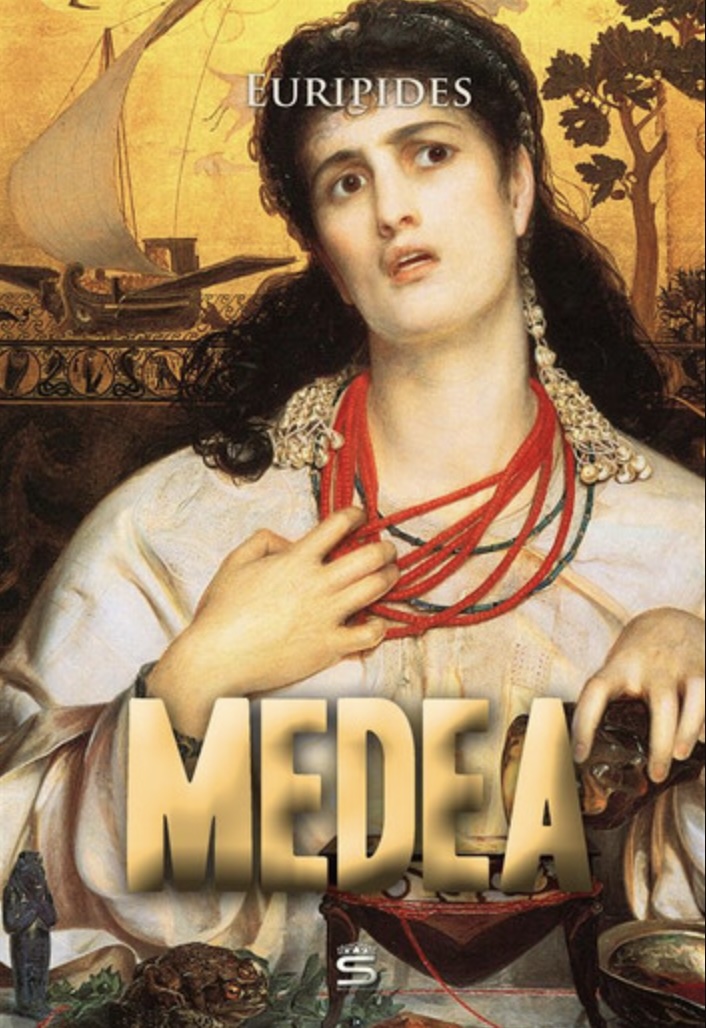
Medea by Euripides
Theodoros Kafantaris
Published on December 23, 2025
1. Introduction
If you think modern psychological thrillers are dark, wait until you meet Medea. First performed in 431 BC, this Greek tragedy by Euripides is a blistering exploration of betrayal, rage, and the terrifying lengths a person will go to when pushed too far.
Unlike many ancient heroes who fight monsters or defy gods, Medea fights a much more intimate battle: the collapse of her marriage. It is a play that shocked its original Athenian audience and continues to leave modern readers breathless. Medea is significant not just because it is a masterpiece of drama, but because it refuses to give us easy answers. It challenges our sympathies, forcing us to watch a woman transform from a pitiable victim into a terrifying avenger.
2. About the Author
Euripides (c. 480 – c. 406 BC) Often considered the "rebel" of the three great Athenian tragedians (alongside Aeschylus and Sophocles), Euripides was known for pushing boundaries. While his peers often focused on the grandeur of the gods and the nobility of heroes, Euripides was interested in the messy, human side of mythology.
He was controversial in his time for depicting mythical heroes as flawed, ordinary people and for giving strong, articulate voices to those usually marginalized in Greek society—namely women and foreigners. His style is marked by psychological realism; he didn’t just show what characters did, he obsessively explored why they did it. Medea is the perfect example of his ability to make the audience empathize with the socially outcast, even when their actions become monstrous.
3. Story Overview
The Betrayal
The story opens in Corinth, where Medea is in a state of emotional collapse. She has sacrificed everything for her husband, Jason (the famous leader of the Argonauts)—she betrayed her father, killed her brother, and left her homeland of Colchis to be with him.
But now, Jason has abandoned her and their two sons to marry Glauce, the daughter of Creon, the King of Corinth. To make matters worse, King Creon, fearing Medea’s reputation as a sorceress, orders her immediate banishment. She is a woman scorned, a foreigner with no rights, and a mother about to be homeless.
The Calculated Deception
Medea is not one to go quietly. Using her sharp intellect and manipulative skills, she begs Creon for just one more day to "prepare" for her departure—a request he grants, sealing his own fate. She then secures a promise of sanctuary from Aegeus, the visiting King of Athens, ensuring she has a place to escape to after her work is done.
With her safety net in place, Medea turns her sights on Jason. She feigns submission, apologizing for her earlier outbursts and convincing him that she accepts his new marriage. As a "peace offering," she sends her children to the palace with gifts for Jason’s new bride: a beautiful robe and a golden coronet.
The Unthinkable Act
The gifts are a trap. The robe and coronet are laced with a deadly poison that burns the princess to death the moment she puts them on; King Creon also dies in agony trying to save her.
But Medea’s revenge on Jason is not yet complete. To hurt him most deeply, she decides to destroy his legacy. In the play’s most harrowing scene, Medea wrestles with her love for her children versus her hatred for her husband—ultimately choosing the latter. She kills her two sons, denying Jason his lineage. The play ends with a shocking deus ex machina: Medea escapes not in chains, but in a dragon-drawn chariot sent by her grandfather, the Sun God Helios, leaving Jason broken in the wreckage of his life.
4. Key Takeaways
-
The Fury of the Oppressed: The play vividly illustrates how marginalization and betrayal can curdle into destructive rage.
-
Insight: When people are stripped of their dignity and agency, they may resort to extreme measures to reclaim power.
-
-
Passion vs. Reason: Medea frequently debates with herself, torn between her "thumos" (passion/anger) and her rational mind.
-
Insight: Unchecked emotion can override our moral compass, leading us to destroy what we love most to hurt those we hate.
-
-
The Complexity of the "Hero": Jason, traditionally a hero for retrieving the Golden Fleece, is portrayed here as an oath-breaker and a political opportunist.
-
Insight: Success in the public sphere means nothing if one lacks integrity in their private relationships.
-
-
The Outsider’s Plight: Medea is a "barbarian" (non-Greek) in a xenophobic society, highlighting the isolation of the immigrant experience.
-
Insight: Cultural isolation can force individuals into corners where they feel they have no allies but themselves.
-
5. Why This Book Is a Must Read
Medea belongs on the '100 Books You Must Read' list because it is arguably the first great psychological drama in Western literature. Euripides strips away the distance of myth to show us a marriage dissolving in real-time. It is uncomfortable, visceral, and morally ambiguous.
You don't read Medea to feel good; you read it to be shaken. It forces you to confront the uncomfortable reality that monsters aren't born—they are made, often by the very societies that condemn them. It remains a definitive text on gender politics and the psychology of revenge.

